
What an AI Voice Agent Is and When Your Business Should Use One
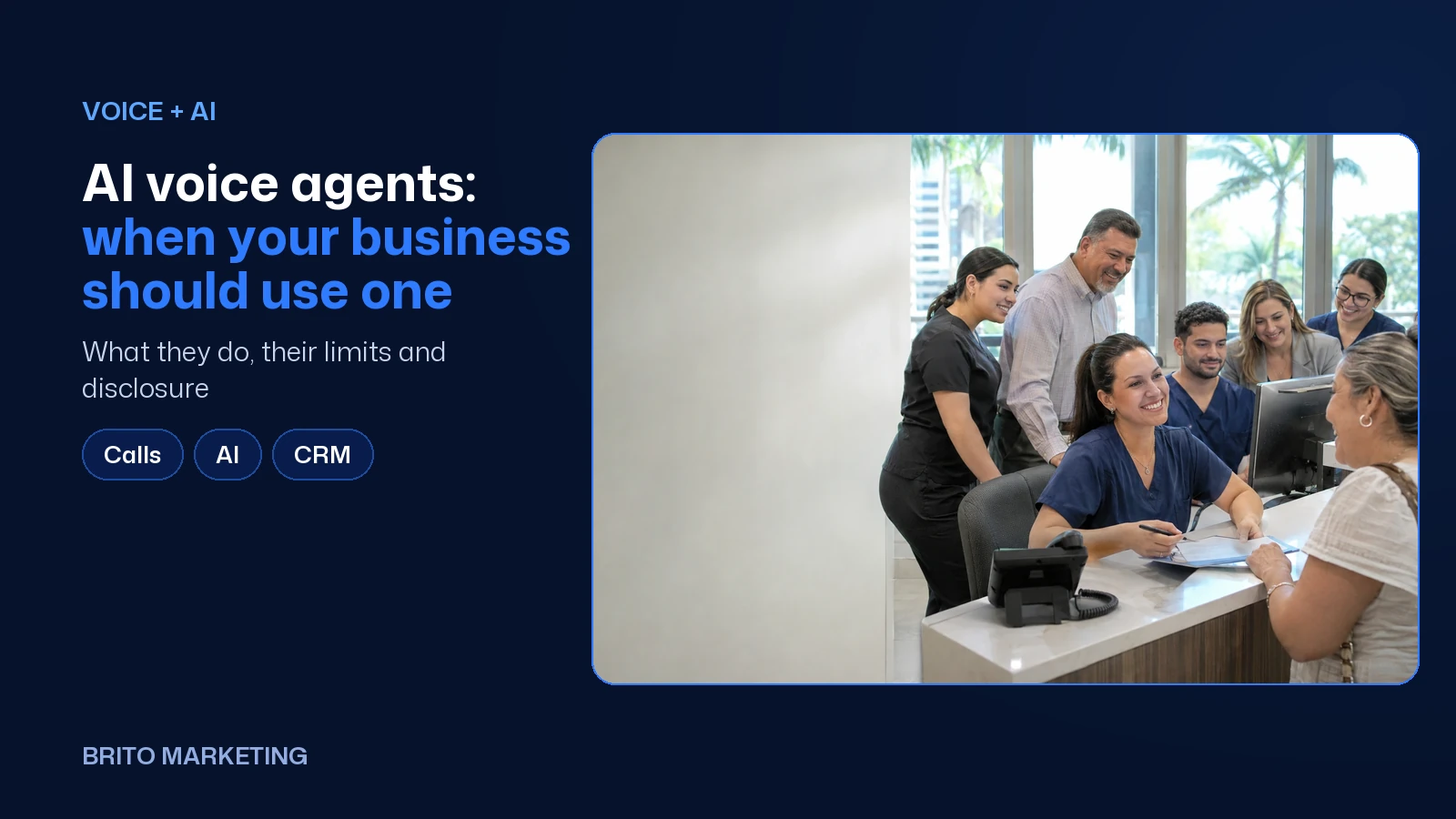
An AI voice agent answers the phone, understands what callers say and books appointments or takes messages. What it does well, where it doesn't belong, why it has to say it's AI and what the law requires for outbound calls or healthcare.
Short answer
An AI voice agent is software that answers and makes phone calls, understands what people say in their own words and responds in a natural-sounding voice. It makes sense for a business that misses calls after hours or at peak times and fields lots of repeat questions. It should say that it's AI and hand sensitive calls to a person.
We've all dealt with the “Press 1 for sales, press 2 for service” phone tree, and nobody misses it. An AI voice agent is a different animal: the caller just talks (“I need to move my Thursday appointment”) and the system understands, answers and acts. Used well, it gives your front desk hours back. Used badly, it frustrates customers and can get you in trouble. This guide is here to help you decide, without the hype, whether your business needs one and how to do it right.
What it is, and how it differs from what you already know
- Compared with a phone menu: nobody has to press numbers. Callers explain what they need in their own words, in English or Spanish.
- Compared with voicemail: the caller isn't left talking to a beep. It answers questions, takes down details and leaves the appointment or message ready to go.
- Compared with a receptionist: it doesn't get tired, doesn't keep hours and can handle several calls at once, but it doesn't have human judgment or read a delicate situation the way a person can.
Under the hood there are three pieces: one that turns speech into text, a language model that understands the request and decides what to say based on the information you give it, and one that turns the reply back into speech. When it's connected to a CRM, it can also check whether the caller is already a customer, book on your calendar and leave a summary of the call.

What it does well
- Picks up after hours and during rush periods, when the front desk is helping someone in person.
- Answers the usual questions: hours, address, services, service area, what to bring, whether you take a certain insurance.
- Books, confirms or moves appointments right on the calendar.
- Takes down a new customer's information and logs it in the CRM with a summary.
- Calls back to follow up with people who asked for information, as long as they've given permission.
- Transfers the call to a person when the situation calls for it.
When it makes sense for your business (and when it doesn't)
| Your situation | Is a voice agent a good fit? | Why |
|---|---|---|
| You miss calls at night or on weekends | Yes | It picks up when nobody's there and logs the appointment or message |
| Your front desk answers the same questions all day | Yes | It frees your team for the people standing in front of them |
| You get calls in English and Spanish | Yes, if it handles both languages well | Callers speak whichever language they're comfortable in |
| Your calls are emergencies or crises | Not as the first point of contact | Those callers need a person right away |
| You sell something complex that gets negotiated | Only for booking | Your team closes the sale |
| You get few calls and handle them well | Not yet | Get your message follow-up in order first |
Its limits
A voice agent knows what you teach it and nothing more. If it doesn't have your services, your policies and what it shouldn't say in writing, it'll improvise, and that's what does the most damage. It shouldn't give diagnoses, legal advice, firm prices on custom work or promises about outcomes. It's also not the right fit for an upset customer. In that moment, the right move is to listen, apologize and transfer the call to someone with the authority to fix the problem.
There are technical limits too. A bad connection, street noise or someone who speaks very softly can trip it up. That's why there always needs to be an easy way out, to a person or to a message.
Ready to apply this to your business?
It has to say it's AI
Those figures come from a Pew survey of 5,023 adults conducted in June 2025 (Pew Research Center, 2025). People want to know who they're talking to, and half of them view AI with some suspicion. Letting a customer believe they're talking to a person when they aren't destroys trust the moment they figure it out, and they will. The right approach is for the agent to clearly say it's a virtual assistant powered by AI and to offer a transfer to someone on your team if the caller prefers.
If the agent makes calls, not just answers them, there's another rule. In February 2024, the FCC ruled that calls using AI-generated voices count as “artificial” voice under the federal Telephone Consumer Protection Act, so they're held to the same rules as prerecorded calls, including prior express written consent for telemarketing calls (FCC, 2024). In practice: only call people who gave you permission, keep a record of it and honor anyone who asks you to stop.

If you're in healthcare: HIPAA
At a medical or dental practice, a voice agent is going to hear names, birth dates and sometimes symptoms. That's protected health information. Before you use one, confirm that the vendor is HIPAA-compliant and will sign a business associate agreement (BAA), that recordings and transcripts are stored securely, and that the agent is set up to never give medical advice and to hand any symptom or urgent situation to your staff. If you'll also feature it in your advertising, review Florida's advertising rules for medical clinics.
How to test it before it goes live
- Write down the 20 questions you get most on the phone and the right answer to each.
- Have you and your team call the agent, in English and Spanish, and ask those questions plus a few curveballs.
- Review the recordings and summaries from the first week and fix whatever it got wrong.
- Decide which situations always go to a person, and test that the transfer actually happens.
- Start with after-hours calls only, and expand once you're comfortable with how it handles people.

Where to start
- This week: look at how many calls you missed last month and at what times. Your phone provider can usually tell you.
- This month: write your 20 most common questions and decide which situations always need a person.
- This quarter: test a voice agent on after-hours calls only, connected to your calendar and CRM, and track how many appointments it books.
BritoCRM includes AI voice agents that answer and follow up by phone, connected to the CRM, so whatever happens on the call lands on the customer's record next to their messages, appointments and payments. We set it up with your business information, in English and Spanish, and back it with personalized support. To see how it fits with the rest of your follow-up, read automated lead follow-up, explained or visit the BritoCRM page.
Figuring out whether a voice agent fits your business, writing what it needs to know and testing it properly takes more time than it looks. At Brito we do it connected to your marketing and the way you serve customers, from Miami since 2006. In Miami-Dade and Broward we come to your business; outside the area, we meet by phone or video call. If you'd like to know how many calls are going unanswered, request a free assessment.
Frequently asked questions
Will my customers notice it's AI?
They should know, because the agent needs to tell them. Today's voices sound natural, but hiding it is a bad idea: people want to know who they're talking to, and finding out later breaks their trust.
Does a voice agent replace my receptionist?
That's not what we recommend. It works best as backup: it covers after hours, rush periods and repeat questions, while your front desk takes care of the patients or customers who need a person.
Can it handle calls in English and Spanish?
Today's agents can work in both languages, but test it with real calls from your team in each one before it goes live. Listen for whether the Spanish sounds natural and whether it understands different accents.
Can I use it to call my customer list?
Only people who gave you permission. Since 2024, the FCC treats AI-generated voices as artificial voices under the TCPA, so telemarketing calls require prior express written consent.
Twenty years building brands in New York, Las Vegas and Miami, where he's based today. He leads a Miami team that shoots commercials on cinema cameras and runs proprietary AI infrastructure. He believes great marketing starts with truly understanding the customer — and that honesty, often frowned upon in this industry, is what separates partners from vendors.
View profile→Questions about your business?
The first conversation is an assessment, not a sales pitch. Let's talk.
Or explore our Growth & Strategy service

Brito Marketing: More Than an Agency, a Complete System for Your Business
Hiring Brito Marketing gets you strategy, advice, mentorship, tailored ads and every service in one place, with a team that knows your business inside out.
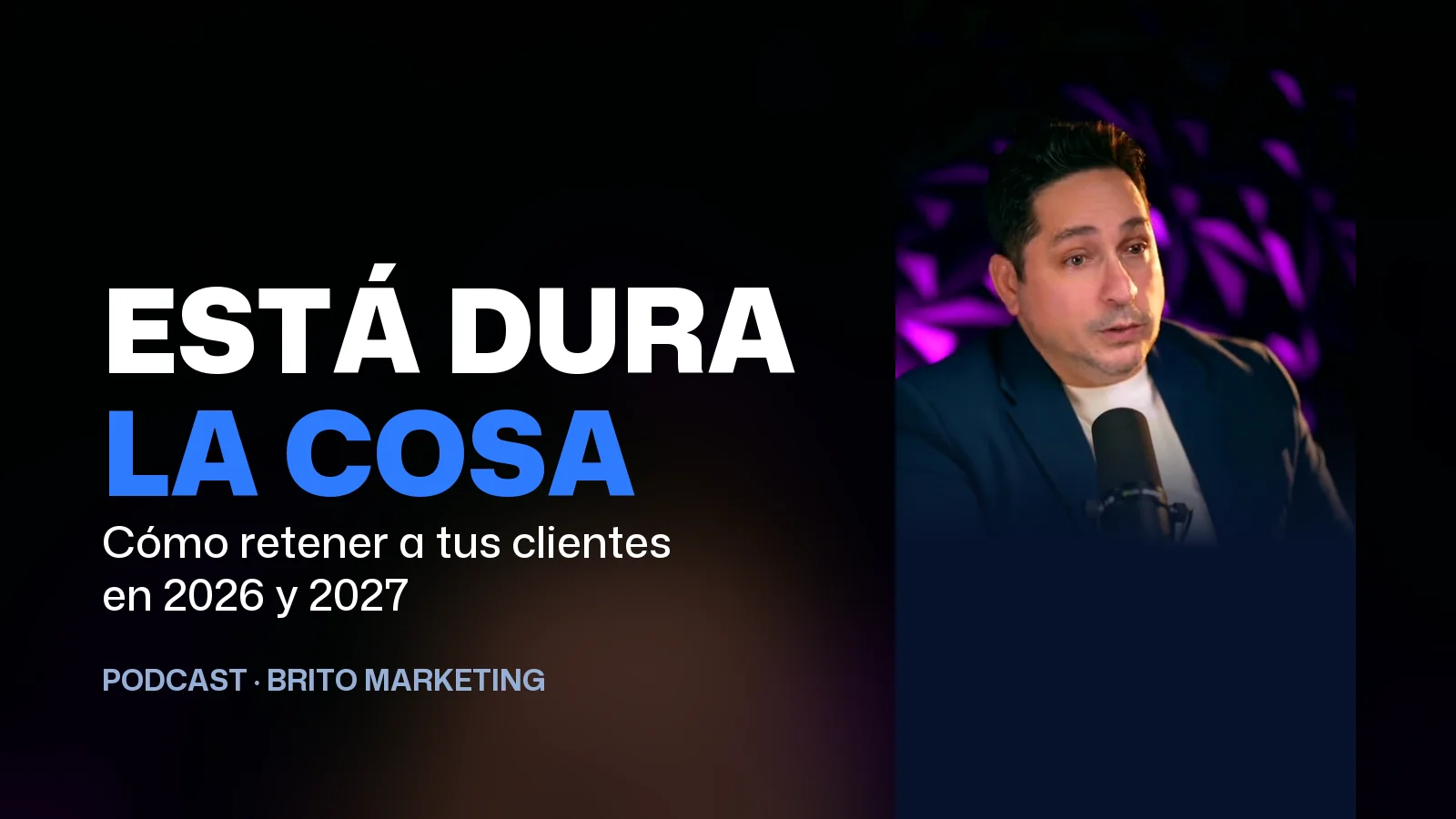
Fewer New Customers in Miami? How to Keep the Ones You Have With Service and Loyalty
Foot traffic is down and new customers are scarce. In a tough economy, what decides whether a customer stays isn't a $10 discount: it's how you treat them. Four fronts for 2026 and 2027, from our video podcast.