
How to Prepare for a Professional Photo Shoot
Strong photos sell your brand; weak ones sell it short. Here's what actually goes into a professional photo shoot worth paying for.
Short answer
To prepare for a professional photo session, first define the image you want to project. The photos you use on social media, your website and blog represent you, your brand and your services. Ask yourself what message you want to send, to whom, and whether your current images attract the right audience.
We live surrounded by images, and they hit people in different ways. Some grab your attention, some pull on your emotions, some leave you inspired. Here's the part most business owners miss: if you want to present yourself well, you need a professional photo shoot. That goes for people, businesses, brands, and new ventures alike.
The photos you run on your social media, your website, and your blog say something about you, your products, and your services. So ask yourself a few honest questions:
- What kind of image do you actually want to put out there?
- How do you want clients and future clients to see your services?
- Are the photos you're using right now catching the eye of the right people?
A weak or wrong photo sells your image, your brand, and your business short. Get the shoot right, though, and you start attracting the clients, readers, and audience you actually want. In this post, we'll walk through everything that goes into a professional photo shoot worth paying for.
What a professional photo shoot needs to get right
For a shoot to land and do its job, a handful of things have to be in place. Here's what they are.
Build a plan around the client and the goal
Professional results don't come from winging it. You work from a plan and a clear purpose. That's how every single shot ties back to the end goal, whether it's a wedding, a newborn session, or product and service marketing.
The reason for the shoot should be obvious and locked in from the start. Get that right and hitting the mark on each frame gets a whole lot easier. You also want to think through the theme and the mood the session is going for. From there you can make smart calls on the location, the color palette, the framing, backdrops, poses, and the rest of the details.
While you're sorting all of that out, keep the client front and center. The point is to bring a plan that fits what the client is trying to accomplish. You'll always show up with a professional plan and offer the right suggestions, sure. But the goal has to serve what the client needs.
So spend real time talking with your client and learning what they're after. Once you understand what they're picturing, you can pitch your ideas and the path forward. A pro always delivers a range of shots so the client has options to pick from. And never delete a photo just because it looks off in the moment. With a little editing, some of those turn out great.
Know the location before you shoot
Where you shoot matters as much as anything. This ties straight back to the last point: the spot has to fit the goal you set for the photos. Scout it ahead of time so you can lock in your angles, framing, and the lighting you'll need. That way you show up ready and with the right gear in hand.
Lighting shifts with the time of day, so keep that in mind. Good photographers visit the location during the day and at night to figure out the best light for the shots. Lighting can make or break whether a session reads as professional.
Bring the gear that gets you the best shots
Your equipment needs to be professional and high quality. You want every piece on hand for the shoot to come out right: the professional camera, extra batteries, memory cards, the flash, the tripod, and so on. Wardrobe counts too, picked to match the kind of session you're running.
Gear isn't just hardware. Think about the software and apps you'll use to edit and polish the photos so the final images line up with the goals you set.
Ready to apply this to your business?
Every detail counts
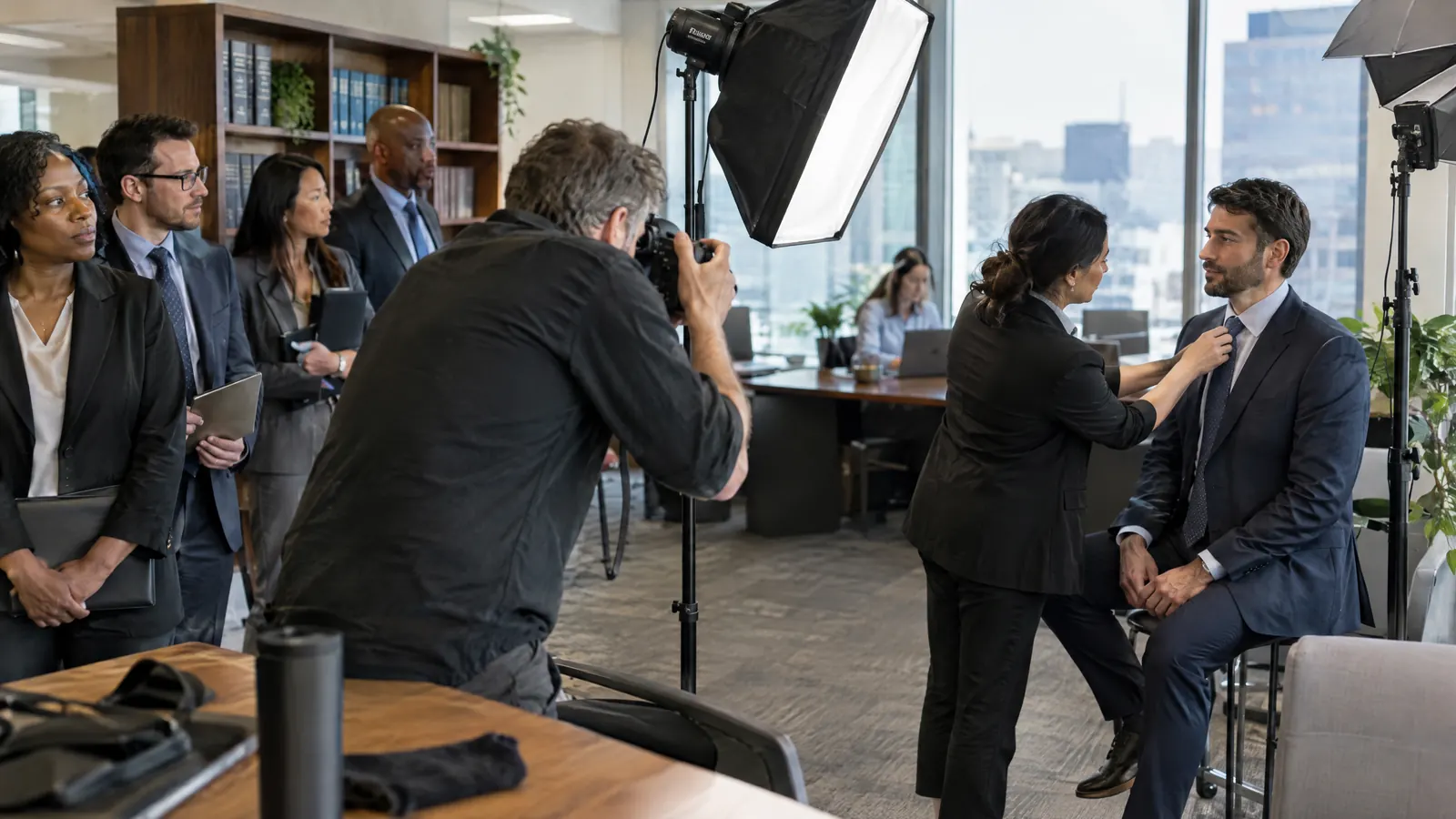
In a professional shoot, nothing is too small to matter. Take product or service advertising photos: a few things make or break them, like your choice of models, their look, makeup, and wardrobe. Remember, this is your calling card. Don't let any detail slide, no matter how minor it seems.
With the models, for example, study the details closely: appearance, clothing, shoes, plus specifics like eyebrows, teeth, the smile, hairstyle, lines on the face, and expressions. That's exactly why you cast models ahead of time. You'll even ask them to take care of their look, their hair, grooming, and the rest.
On shoot day, everyone in front of the camera should look their best. They should be well rested so you're not fighting bags under the eyes or a tired face. Props matter here too. Every detail has to work with the theme and the goal.
Always have a plan B
A professional photographer is ready for anything, the curveballs included. Things go sideways sometimes and throw off the main plan. That's why you want a plan B you can fall back on no matter what comes up.
Plan B means spare models, backup gear, extra batteries, clothing, and props. It can even mean a second location or setting where you can run the session instead. Keeping a running list of different shoot ideas helps a lot. When things change, you adapt faster.
It goes further than that, though. A real pro has to be able to improvise, to find inspiration on the fly without being boxed in by one rigid plan. Sometimes the inspiration shows up in the moment, and those one-of-a-kind chances are worth grabbing.
Bring a photographer's assistant
An assistant is a serious asset on a professional shoot, especially when you're building out a full set with props, lighting, and everything the theme calls for. Models need prepping too. Having help frees the photographer up to focus on getting the perfect shots.
Beyond that, your support crew can include people handling makeup, touch-ups, styling, image consulting, and whatever else moves the day along.
Set a budget
You need a budget on paper. To set it, weigh the complexity of the project, the date it's happening, and a few other factors. For instance, figure out whether you need models and how many. Same goes for the pieces you'll use to dress the set and the location you've picked.
All of that feeds straight into the final number. For some clients, budget barely registers. They just want the result and don't care what it costs. For others, it's a real concern. So nail all of this down up front.
Pick the right props for the shoot
Props are a big part of what makes a professional shoot work, used the right way. They should match the client, the goal of the photos, and the theme. They don't have to be plentiful or flashy or complicated.
Sometimes a few simple pieces get you there. You might bring in things like guitars, balloons, animals, or natural elements. The aim is to keep the photos balanced and in harmony.
Copyright
Copyright should always be spelled out in a contract that the client signs. That's how you protect the work you created. This kind of agreement states that the client can't put the photos out publicly or sell them.
Now you know what goes into a professional photo shoot that actually delivers. Don't let anything get between you and your goals. Choose a professional service that's built to hit them.
Twenty years building brands in New York, Las Vegas and Miami, where he's based today. He leads a Miami team that shoots commercials on cinema cameras and runs proprietary AI infrastructure. He believes great marketing starts with truly understanding the customer — and that honesty, often frowned upon in this industry, is what separates partners from vendors.
View profile→Questions about your business?
The first conversation is an assessment, not a sales pitch. Let's talk.
Or explore our Video & Media service

Cybersecurity and Data Protection: What Every Business Owner Should Know
Cybersecurity and data protection work hand in hand but aren't the same. Here's the difference, and why your business needs both.

25 Ways to Grow Your Ecommerce Sales This Year
Shoppers expect more and rivals copy fast. Here are 25 proven strategies to grow your online store's sales and keep customers coming back.