
Florida Lawyer Advertising Rules: What The Florida Bar Requires and How to Comply
What The Florida Bar's Rule 4-7 requires of a law firm's ads: name and city, language, testimonials, "expert" claims, actors, and filing with the Bar 20 days ahead. Every rule with its number and its source.

Short answer
In Florida, lawyer advertising follows Chapter 4-7 of the Rules Regulating The Florida Bar. Every ad names a lawyer or the firm and the city of a real office, the required text appears in the language of the ad, nothing promises results or claims "the best" without proof, and TV, radio, print, internet and paid social ads are filed with the Bar at least 20 days before they run. The firm's own website is exempt from filing.
If you run a firm in Florida and advertise in English, Spanish or both, these rules cover everything you put out: TV, radio, mail, email, internet, banners, pop-ups, websites, social media and video (Rule 4-7.11(a)). These are the ones that matter most in a campaign, each with its rule number. All of them come from the current text of the Rules Regulating The Florida Bar, Chapter 4, October 1, 2026 edition, and from the Bar's official guidance, checked on October 17, 2026.
1. A name and a city in every ad
Every ad names at least one lawyer or the firm responsible for its content, plus the city, town or county of at least one bona fide office (Rule 4-7.12(a)(1)–(2)). And the required information has to be clear and conspicuous: legible when written, intelligible when spoken (Rule 4-7.12(d)).
How we handle it: we put it in every piece, including short social and search formats.

2. If you advertise in Spanish, the required text is in Spanish too
Whatever the rules require appears in the same language as the ad, and if the ad uses more than one language, it appears in each of them (Rule 4-7.12(c)). The Bar's Handbook on Lawyer Advertising and Solicitation clears up a common case: if "Se habla Español" is the only non-English text, you don't have to repeat the required information in Spanish. When an ad you file with the Bar has parts in another language, the filing includes an accurate English translation (Rule 4-7.19(h)(4)).
How we handle it: we write in both languages from the start, with the disclosures in every language the ad uses.
3. No promises, no "the best" and no "expert" without proof
Anything that reads as a prediction or guarantee of success or of a specific result is misleading (Rule 4-7.13(b)(1)). So are comparisons and statements about skill, experience or reputation that can't be objectively verified; the comment to the rule gives "the best," "one of the best," "second to none" and "the finest" as examples (Rule 4-7.13(b)(3)).
"Board certified" requires a recognized certification, and the ad names the area and the certifying body (Rule 4-7.14(a)(4)). "Specialist" or "expert" requires that certification or objective backing the lawyer can verify; if the firm makes the claim and it doesn't apply to all its lawyers, it needs a disclaimer that not all of them specialize (Rule 4-7.14(a)(5)–(6)).
How we handle it: we write with facts that can be checked, and use those titles only if your firm holds them, with the area and the certifying body.
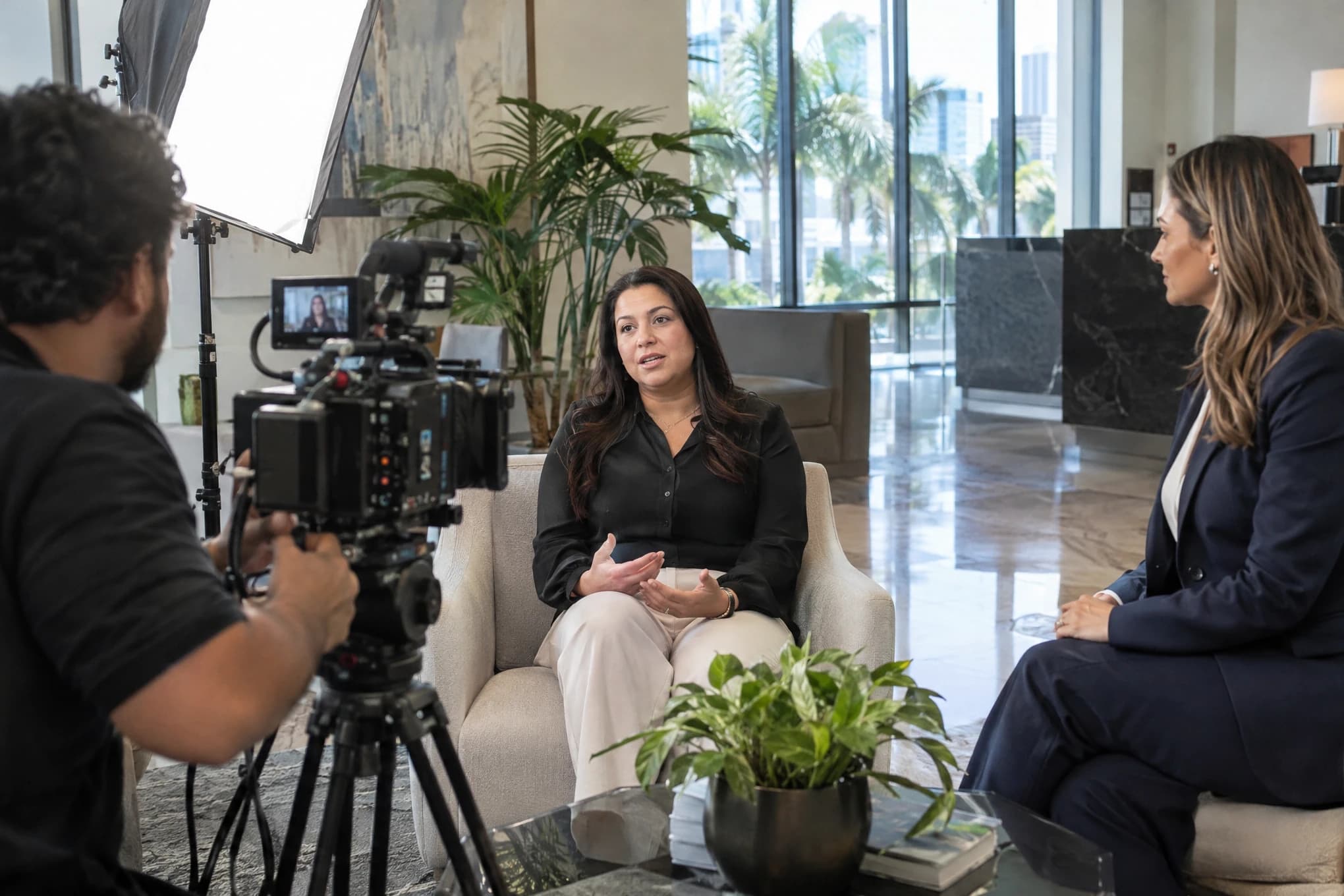
4. Testimonials and past results
A past result can be advertised only if it's objectively verifiable, and the comment to the rule adds that it takes the client's informed consent, even when the case is public (Rule 4-7.13(b)(2)). A testimonial can't cover something the person isn't qualified to judge, stray from their actual experience, present as typical what clients don't usually get, be written by the lawyer, or be given in exchange for anything of value. And it carries the disclaimer that a prospective client may not get the same or similar results (Rule 4-7.13(b)(9)).
How we handle it: we use testimonials in the client's own words, with the disclaimer, and results only with the client's consent and a fact that can be checked.
Ready to apply this to your business?
5. Actors, voices, dramatizations and authority figures
If a voice or image suggests that the person speaking or shown is the lawyer or someone at the firm, and it isn't, the ad says so (Rule 4-7.13(b)(5)). A dramatization viewers wouldn't recognize as one gets its disclaimer (Rule 4-7.13(b)(6)), and so does an actor playing a professional (Rule 4-7.13(b)(7)). A judge, a police officer or an actor playing one can't endorse the lawyer, and neither can a celebrity's voice or image, except a local announcer who gives no testimonial or a celebrity who is or was a client and whose testimonial meets the rules (Rule 4-7.15(b)–(c)).
How we handle it: we keep the disclaimer on screen for the whole scene, and we don't film endorsements by authority figures.
6. Fees, and The Florida Bar's name
If an ad mentions fees, including "no fee unless we recover," it has to disclose all fees and costs, and an advertised fee is honored for at least 90 days (Rule 4-7.14(a)(7)). And no ad can state or imply that The Florida Bar approved it or the lawyer; the only thing allowed is saying the lawyer is licensed in Florida or certified under Chapter 6 (Rule 4-7.13(b)(10)).

7. What gets filed with the Bar, and when
Unless an exemption in Rule 4-7.20 applies, the advertising lawyer files a copy of each ad with The Florida Bar at least 20 days before it's first disseminated (Rule 4-7.19(a)). According to the Bar's filing requirements page and its advertising FAQ, that covers TV, radio, print, internet ads and paid social advertising, including boosted or sponsored posts. The handbook adds direct mail, email and text messages, and targeted social posts.
What doesn't get filed: the firm's own website, including its pop-ups (Rule 4-7.20(g)), the firm's social media pages and its YouTube videos, even though all of them follow the rules. A whole website can't be submitted for review, but you can ask for an opinion on a specific page, phrase or photo (Rule 4-7.19(d)).
If the Bar doesn't respond within 15 days of receiving a complete filing, the lawyer isn't subject to discipline over that ad. The review covers the ad as it appears: the accuracy of the facts remains the lawyer's responsibility (Rule 4-7.19(b) and (e)). And the firm keeps a copy or recording of each ad for 3 years after its last use, with a record of when and where it ran (Rule 4-7.19(j)).
How we handle it: we plan the calendar around that window and hand you each piece, with its transcript and an English translation, ready for your firm to file.
The rules at a glance
| Topic | What it requires | Rule |
|---|---|---|
| Identification | Name of a lawyer or the firm, plus the city or county of a real office | 4-7.12(a) |
| Language | Required text in every language the ad uses | 4-7.12(c) |
| Promises | Nothing that reads as a guaranteed result | 4-7.13(b)(1) |
| Comparisons | No "the best" unless it can be verified | 4-7.13(b)(3) |
| Titles | "Board certified," "specialist" or "expert" only with backing, naming the area and body | 4-7.14(a)(4)–(6) |
| Testimonials | Real, not written by the firm, unpaid and with the disclaimer | 4-7.13(b)(9) |
| Actors and reenactments | Clear disclaimer; no judges or police officers endorsing | 4-7.13(b)(5)–(7), 4-7.15(b) |
| Fees | All fees and costs; honored for at least 90 days | 4-7.14(a)(7) |
| Filing with the Bar | At least 20 days before first use; the firm's website is exempt | 4-7.19(a), 4-7.20(g) |
| Records | A copy of each ad for 3 years after its last use | 4-7.19(j) |
Where this fits in your marketing
At Brito Marketing these rules go into every campaign from the first draft, not as a check at the end. That's how we approach marketing for law firms in Florida, in English and Spanish. If you already know what you need, create your marketing plan on our website.
Sources
Rules Regulating The Florida Bar, Chapter 4 (PDF, October 1, 2026 edition) · The Florida Bar: Advertising Filing Requirements · Handbook on Lawyer Advertising and Solicitation, 13th edition · The Florida Bar: advertising FAQ. All checked on October 17, 2026.
This isn't legal advice; review your ads with your attorney or with The Florida Bar.
Twenty years building brands in New York, Las Vegas and Miami, where he's based today. He leads a Miami team that shoots commercials on cinema cameras and runs proprietary AI infrastructure. He believes great marketing starts with truly understanding the customer — and that honesty, often frowned upon in this industry, is what separates partners from vendors.
View profile→Questions about your business?
The first conversation is an assessment, not a sales pitch. Let's talk.
Or explore our AI Advertising service

Florida Dental Advertising Rules: What the Law Requires and How to Comply
What Florida law requires of a dental practice's ads: identify the dentist, no praise or comparisons, "specialist" only with the credential, the 72-hour notice on offers, and how to advertise prices. Every rule with its citation and source.

Florida Insurance Advertising Rules: What the Law Requires and How to Comply
What the law requires of an insurance agency's ads in Florida: nothing misleading about the policy, never looking like the government, the insurer's name on health ads, real testimonials and the Medicare notice. Every rule with its citation and source.