
Lean Thinking: Cut the Waste and Get More Out of Your Business
Lean Thinking is about cutting the work that adds nothing and doubling down on what serves the customer. Here's how to put it to work in your business.
Short answer
Lean Thinking is a methodology born at Toyota that removes waste from your processes so you can focus on what truly matters: meeting your customer's needs. Instead of doing more, you do better. By cutting the steps that add no value, you sharpen results and work with less friction.
Lean Thinking exists to cut the work that's pure waste so you can put your energy into the steps that actually serve the customer.
Welcome back. Today we're getting into Lean Thinking and how this approach can help you tighten up your operations and get more out of every move you make. It's one of those methods that sounds technical until you see what it really does for a business. Ready to see how it works?
What is Lean Thinking?
"Picture a business where every step, from production to the moment the product lands in the customer's hands, is built to cut waste and zero in on what truly matters: meeting your customers' needs."
That's the whole point of Lean Thinking. The method was born at Toyota, and it runs on one simple idea: any activity that doesn't add value for the customer is waste, and it should be cut or trimmed down as far as possible.
The core pillars of Lean Thinking
Lean Thinking stands on five principles that work as the foundation for transforming your business:
- Identify the value. Start by figuring out what your customer actually values. What do they expect to get when they buy your product or service? Once you're clear on that, you can point your effort at meeting those needs and drop anything that doesn't move the needle.
- Map the value stream. Now it's time to map out and visualize your processes. Walk through every step, from the moment materials come in to the moment the finished product goes out. This is how you spot the bottlenecks and the places that need work.
- Create flow. Once you've mapped the value stream, optimize it. Look for ways to cut the tasks that add nothing, simplify the steps, and run leaner overall. The goal is a smooth, continuous flow with no needless delays or waiting.
- Pull, don't push. Lean Thinking runs on "just in time" production. Instead of piling up inventory, you make what you need, when you need it. That cuts costs, stops resources from going to waste, and lets you react fast when demand shifts.
- Chase excellence, always. The last pillar is a commitment to getting better, on purpose, every day. Build a culture where everyone on your team is looking for smarter solutions and pushing steady improvements into the work.
Putting Lean Thinking to work in your business
Now that you know the basics, it's time to put them into play. Here are a few ways to bring this method into your own shop:
Listen to your customers
You can't meet your customers' needs if you don't know what they are. Open real channels to collect feedback and opinions. Use surveys, interviews, or social media to learn what your customers value and how you can do it better.
Cut the waste
Look hard at every step in your process and ask whether it really adds value. Find the busywork, the long waits, the excess inventory. Strip out anything that isn't essential and tighten up your operations.
Give your team real ownership
Lean Thinking thrives on collaboration and getting your whole team involved. Build an environment where people feel safe enough to share ideas and suggest fixes. Remember that innovation and quality come from every corner of your company.
Use the right technology
The right tools can be a huge help on the road to Lean. Look for software that lets you track your processes, measure the numbers that matter, and automate the repetitive stuff.
"That frees up time and resources for the work that actually moves your business forward."
Measure and improve, constantly
Set clear performance metrics to track how you're doing. Measure cycle time, efficiency, customer satisfaction, and whatever else matters in your business. Use what you learn to find weak spots and build a plan to fix them.
Practice Kaizen
Kaizen is all about continuous, gradual improvement. The idea is that small, steady changes add up to a big impact on efficiency and quality over time. Put Kaizen programs in place where employees are encouraged to spot and suggest improvements in their own areas.
Make it visual
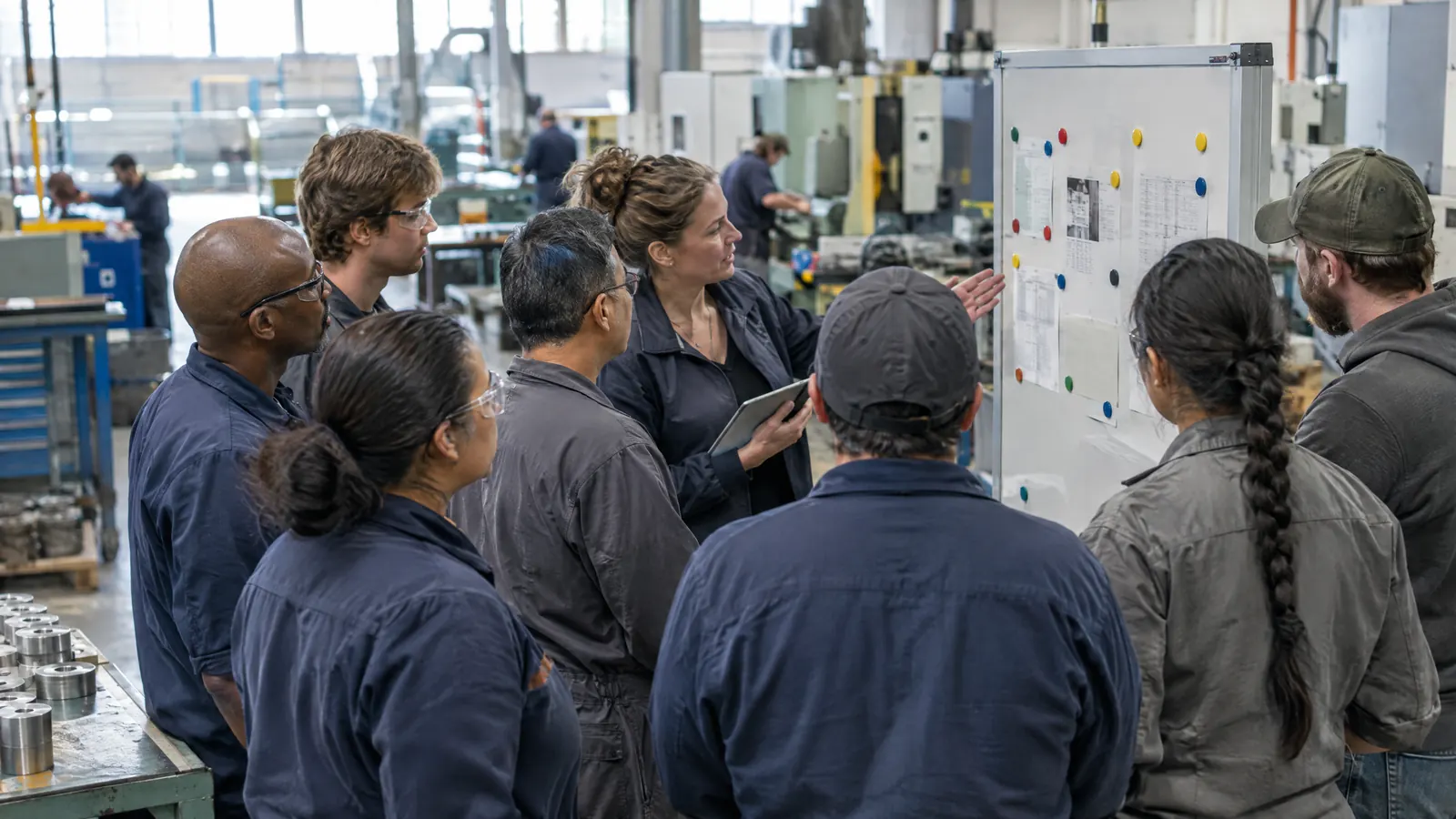
Use visual tools to make your processes clearer and easier to follow. Build tracking boards, charts, or diagrams that show where each process stands, the goals, and the key numbers. That gives everyone on the team a clear picture of what's happening and where things can get better.
Break down the silos between departments
Get different departments working together. Push for open communication and cooperation across teams to break down silos and smooth out the workflow. When you knock down those internal walls, efficiency and quality go up across the whole value chain.
Just-in-Time across your supply chain
Apply Just-in-Time beyond production, all the way through your supply chain. Work closely with your suppliers to keep communication flowing and sync up your orders and deliveries. You'll carry less inventory, wait less, spend less, and run more efficiently.
Raise the bar on quality
Lean Thinking isn't only about cutting waste. It's also about making your products or services better. Put serious quality control programs in place and set up ways to gather and analyze data on customer satisfaction and quality issues.
"Use that information to take corrective and preventive action, and keep raising your quality standards over time."
Do Gemba Walks
Get out to the floor regularly. These visits, called "Gemba Walks," let you watch the work happen and gather information firsthand. Talk to your people, hear their ideas and their concerns, and write down every chance to improve that you notice. These walks give you a deep, real understanding of the challenges and opportunities in your business.
Practice Lean Thinking in your business and watch it change
Lean Thinking is a lot more than a management method. It's a way of working that helps you focus on what really matters, cut the waste, and deliver value to your customers. Build it into your business and you're laying the foundation for real excellence and profit that lasts.
Every company is different, so take these ideas and shape them to your own needs and situation. Lean Thinking is flexible. It bends to fit different industries and organizations. Go ahead and experiment with new ways to put it to work in your business.
Twenty years building brands in New York, Las Vegas and Miami, where he's based today. He leads a Miami team that shoots commercials on cinema cameras and runs proprietary AI infrastructure. He believes great marketing starts with truly understanding the customer — and that honesty, often frowned upon in this industry, is what separates partners from vendors.
View profile→Questions about your business?
The first conversation is an assessment, not a sales pitch. Let's talk.
Or explore our AI Advertising service

Digital Marketing for Hispanic Businesses in the US: The Complete Guide
What changes when your customers live between two languages, and how local SEO, AI, ads, social, WhatsApp, email and brand fit into one plan.

FOMO in Marketing: How to Turn the Fear of Missing Out Into Sales
FOMO, the fear of missing out, quietly steers what people buy. Here's how to build it into your campaigns honestly, with 20 plays you can use this week.