
Video Marketing for Miami Businesses: Why It Connects and How to Start Simple
Video puts a face and a voice on your business — and that's what earns trust. Here's how to start today without an expensive production.
Short answer
Video connects because seeing the owner's face and hearing their voice builds the trust word of mouth used to carry — in English, Spanish or both. To start, your phone is enough, kept well lit and consistent. Save professional production for the big pieces: your website video or paid ads.
Picture the owner of a Colombian restaurant in Hialeah. Fifteen years making the best bandeja paisa in the neighborhood, but on Instagram all he has are photos of the plate. Nice photos, sure, but identical to every other restaurant's. One day his niece films him on her phone talking about why he uses one specific supplier's chicharrón, with his accent, his hands moving, the kitchen behind him. That thirty-second video, no fancy editing, sparks more conversation than he'd seen in weeks. It's not magic. It's that people finally saw him.
That, in a nutshell, is what video is about for a Hispanic business. Not movie production, not going viral. It's putting a face and a voice on what you already do well, so the customer trusts you before they even call.
Why video connects so strongly with the Hispanic market
Hispanic culture is oral and personal. People want to see the person, hear how they talk, and sense whether they're genuine or just selling hot air. A photo doesn't carry that. Text carries even less. But a ten-second video where the owner says hello, explains something, or just laughs tells you in a heartbeat whether that person can be trusted.
For the Hispanic customer in Miami, that counts double. Many come from countries where word of mouth was everything, where you bought from the person you knew. Digital video is the modern version of that: it swaps the neighbor's recommendation for the feeling of "I already know this guy, I've seen him, I like him." And there's one thing you can't fake: warmth. When someone speaks from a genuine place, it shows. When they read a stiff script, that shows too, and not in a good way.
Another thing: language and nuance. Video lets you speak in Spanish, in Spanglish, with the expressions your customers use and the humor they get. That's nearly impossible to pull off with translated text. Video lets you be yourself, and being yourself is your biggest edge against the big chain that has no face.
Types of video, sorted by what you want to happen
Not every video does the same job. Before you hit record, ask what you want to happen. These are the four that work best for Hispanic businesses, each with its own role:
- Testimonial: a real customer telling their story in their own words. It builds the most trust because it's not you saying you're good, it's someone like the person watching. Film it natural, no memorized lines.
- Behind the scenes: how you prep the food, how you work in the shop, how you set up the event. It shows the process and the human behind it. It lowers people's guard and makes your business feel real and close.
- Short educational clip for social: a quick tip, a common customer question answered in thirty or sixty seconds. It positions you as the one who knows and gets people to save and follow you.
- Brand commercial: the most produced one, the piece that tells who you are and what you stand for. This one does call for more care and usually justifies real production, but it's a single piece, you don't need it every week.
Most businesses obsess over the brand commercial and neglect the other three, which are the ones that actually feed your feed week after week. The commercial is your Sunday best; testimonials, behind the scenes, and short tips are your daily bread.

Starting simple: your phone, used well, is enough
Here's the good news. You don't need a thousand-dollar camera to start. The phone in your pocket films better than a professional studio did ten years ago. What you do need is to use it well, and that's easier than you'd think.
- Light: stand facing a window or film outside in daylight. Good light fixes ninety percent of amateur video.
- Sound: it's what gives a cheap video away fastest. Film somewhere quiet and get close to the phone. A twenty-dollar lapel mic changes everything.
- Steadiness: prop the phone on something or grab a basic tripod. Shaky footage makes people dizzy and makes the business look less serious.
- Vertical for social: film upright, not sideways, if it's for Reels, TikTok, or Stories. That's how content shows up there and you don't want to fight the format.
Start with the simple stuff, stay consistent, and don't worry if it isn't perfect. An honest, well-lit video shot on a phone beats an expensive commercial that feels fake. Perfect is the enemy of published.
Ready to apply this to your business?
When it really is worth moving up to real production
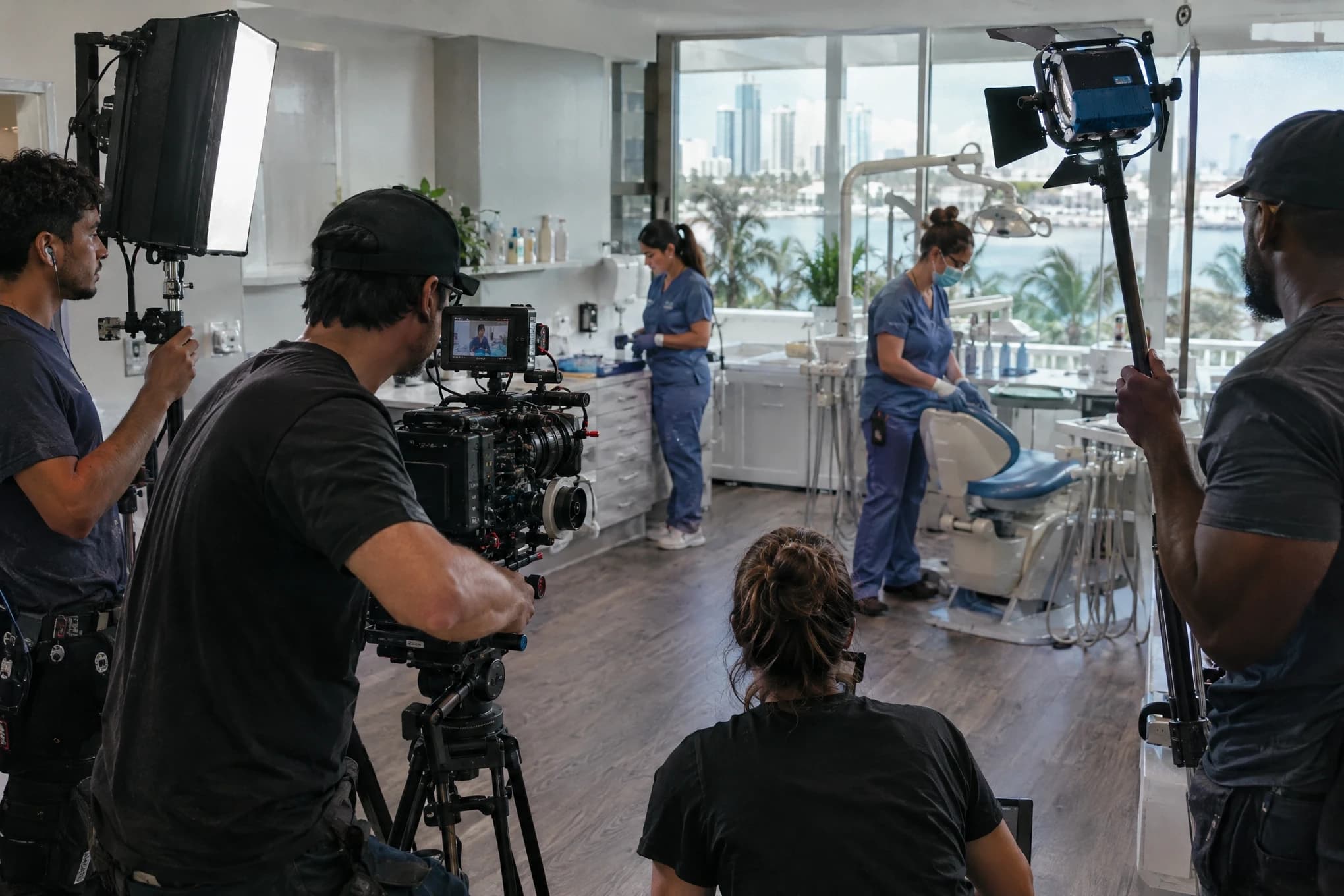
All that said, there's a point where the phone falls short. If you're making the brand commercial that will live on your website for two years, or a video that'll be the face of a paid campaign where you're putting real money into ads, that's when professional production earns its keep. Good camera, good light, editing, music, a thought-out script. That video works for you a long time and deserves the investment.
The simple rule: for the day-to-day of your social feeds, the phone plus consistency. For the big pieces that represent your brand and will live in your web design and your ads, real production. At Brito we produce video, it's a service we genuinely offer, and the first thing we tell you is that not everything needs an expensive production. Sometimes the best move is teaching you to shoot the everyday stuff yourself and saving the production for what truly calls for it.
The mistakes we see over and over
Almost every video that flops fails for the same reasons. Avoid these four and you're already ahead of most:
- The stiff script: reading a rigid text word for word. It kills the warmth, which is exactly what makes video work. Better to know three points and just talk.
- No captions: most people watch video with the sound off, on the bus, in a waiting room, at work. Without captions they don't get you and they scroll past. On social they're basically mandatory.
- Same format everywhere: dropping your horizontal YouTube video straight into a Reel. Each platform has its own shape and rhythm. Adapt the cut, don't paste the same thing everywhere.
- Post once and vanish: shooting one video, seeing no results in a week, and quitting. Video is consistency, not a lucky break.

Video on social and on your website
Video doesn't only live on Instagram or TikTok. Yes, social is where it moves the most and where short educational clips and behind-the-scenes videos do their job of drawing people in and building community. But the same material pays off on your website, where a video on the homepage or a testimonial on the services page turns visits into calls far better than a block of text.
A good brand video on your page also helps your business feel serious and real, and that matters more and more when people are comparing you to the competition or checking who you are before they reach out. The same effort, split well between social and web, works twice as hard.
The honest part: it's not virality, it's consistency and truth
I'm not going to promise that a video makes you go viral, because nobody can honestly promise that. Viral is mostly luck and you can't plan it. What does work, week after week, is posting real video, with your face and your voice, consistently. That's the boring work that actually delivers.
If you don't know where to start, or if what you're already doing on social isn't bringing in customers, the first step is an honest diagnostic of where you stand. Tell us what you've got today and we'll tell you, straight, what video makes sense for your business and what you can shoot yourself this week. No magic promises, just a plan you can actually keep up.
Twenty years building brands in New York, Las Vegas and Miami, where he's based today. He leads a Miami team that shoots commercials on cinema cameras and runs proprietary AI infrastructure. He believes great marketing starts with truly understanding the customer — and that honesty, often frowned upon in this industry, is what separates partners from vendors.
View profile→Questions about your business?
The first conversation is an assessment, not a sales pitch. Let's talk.
Or explore our Social & Content service

Brito Marketing: More Than an Agency, a Complete System for Your Business
Hiring Brito Marketing gets you strategy, advice, mentorship, tailored ads and every service in one place, with a team that knows your business inside out.

Florida Lawyer Advertising Rules: What The Florida Bar Requires and How to Comply
What The Florida Bar's Rule 4-7 requires in a law firm's ads: name and city, language, testimonials, "expert" claims, actors, and filing with the Bar 20 days ahead. Every rule, with its number and source.