YouTube Marketing: An Educational Channel Built to Win Customers
How to build a YouTube channel that answers your customers' questions: topics, formats, language, findable titles, and a clear path to your WhatsApp.
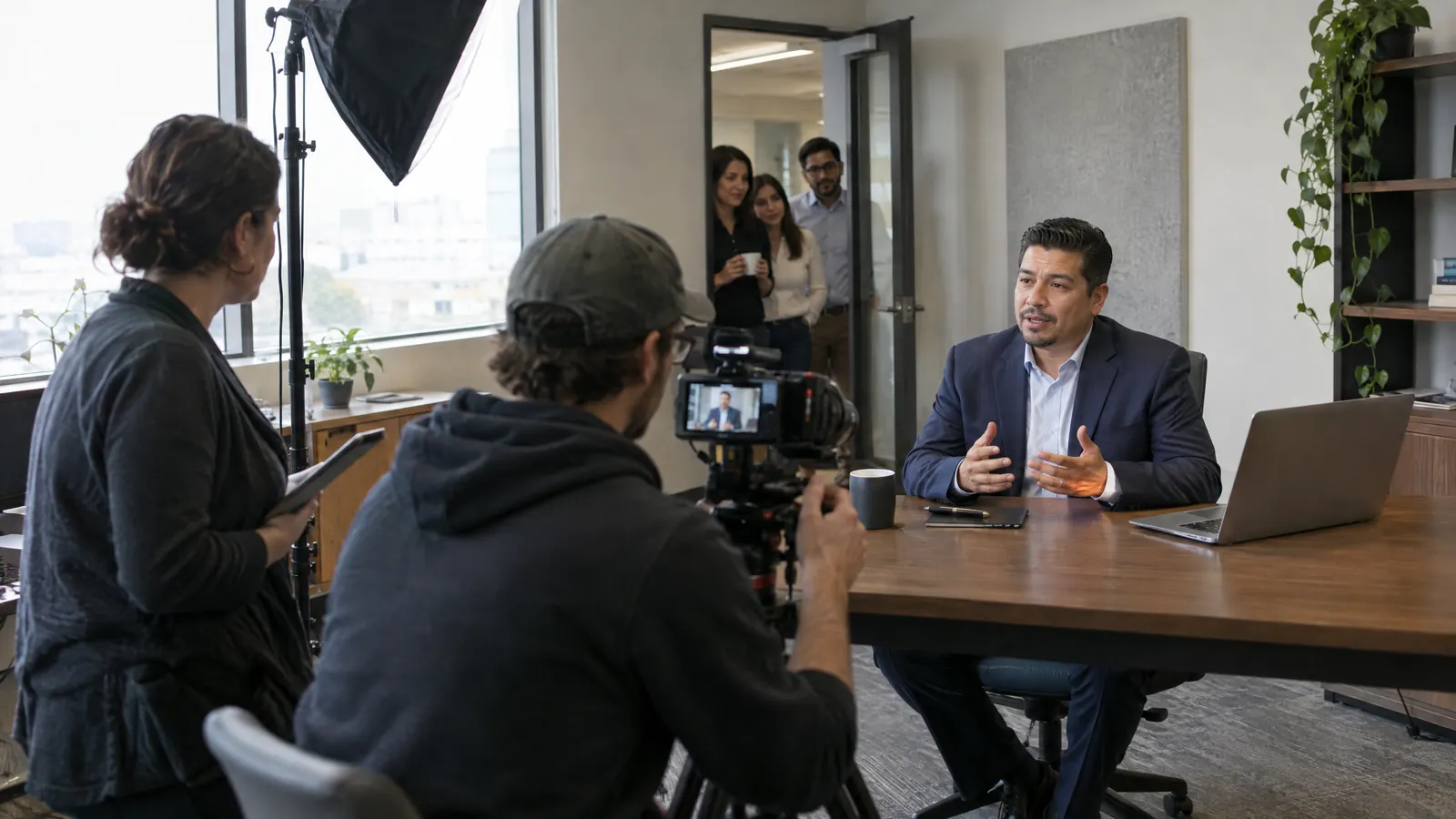
An educational YouTube channel makes sense for a business when it answers on video the same questions your customers ask on the phone before hiring you. The goal isn't fame or earning money from the platform's ads: it's for people searching that topic to find you, see how you explain things, and reach your website or your WhatsApp with much of the trust already built.
Your topics come from your customers' questions
The most reliable source of topics isn't a keyword tool; it's your own inbox. What people ask you on WhatsApp, on the first call, or at the front desk is exactly what others type into YouTube's search bar before they decide.
- Ask your team to jot down, for a few weeks, every question that keeps coming up, in the customer's own words.
- Group them by stage: before buying (how it works, what's included, how one option differs from another), during the service (what to expect, how long the process usually runs), and after (care, maintenance, common mistakes).
- Type the start of each question into YouTube's search bar and look at what it suggests: that's how people phrase it.
The rule that organizes everything else: one question, one video. A video that tries to answer everything doesn't show up for anything.
Formats that fit a business's schedule
You don't need a recording studio. You need a format you can repeat without bringing the business to a halt. If you're going to spend on something, make it a decent microphone: echoey audio wears people out long before simple visuals do.
- The quick answer. One question, answered vertically as a Short, no intro. It clears up the simple stuff and lets people get to know your face and how you explain things.
- The deep dive. A horizontal video that walks through a topic step by step, with examples. It's for the person who's comparing options and needs to understand before deciding.
- The process, start to finish. What happens from the moment someone reaches out until the job is done. It takes away the fear of the unknown, which is often what stalls a purchase.
- The honest comparison. This option versus that one, when each makes sense, and when yours isn't the right fit. It builds trust precisely because it isn't pushing a sale.
- Behind the work. Your team in action, how quality gets checked, the care that goes into the details. Never show customers who haven't given their permission.
- Live Q&A. A livestream to answer whatever comes in.
One well-shot long video can be cut into several short pieces for YouTube, Instagram, and TikTok. That's how we plan video production at Brito: one shoot designed for multiple formats and platforms.
Language: English, Spanish, or both
If you serve customers in both languages, the decision depends on how they search, not on which language you'd rather record in. The same person may look up some topics in Spanish and others in English. You have three paths:
- One channel with playlists by language. The simplest way to get going: a single community and one playlist per language.
- Two separate channels. This makes sense when the audiences and topics are clearly different and you have the capacity to keep both fed on a regular basis. Otherwise you end up with two half-built channels.
- One main language, the other in captions. Record in the language most of your customers use, then upload captions, plus a translated title and description, in the other. YouTube lets you add those translations from your channel dashboard.
Whichever path you choose, upload captions a person has reviewed. Automatic ones trip over names, brands, and the English-Spanish mix of a real conversation. Captions help people watching with the sound off and give YouTube text to understand what the video is about. And don't mix languages within one video without a reason: someone who searched in English expects English. Speaking both languages is an advantage for your business, not a label that boxes it in.
Ready to apply this to your business?
Titles and descriptions people can find
YouTube works like a search engine, and its videos can also show up in Google results. To get found:
- A title that asks the question the way your customer would. Clear over clever, with the important part up front, because on a phone the end gets cut off.
- The first lines of the description carry weight. They're what people read before expanding it: sum up the answer there and add the link to the next step.
- Chapters on longer videos. Marking the sections in the description helps people looking for one specific part and gives YouTube more context.
- A thumbnail that matches the title. One idea, few words, readable on a small screen. If it promises something the video doesn't deliver, you lose the trust you were building.
- Playlists by topic and language, plus end screens or cards that lead to the next logical video.
From the video to your website or WhatsApp
A channel that goes nowhere is a hobby. Every video needs one clear next step, and only one, so nobody has to guess what to do.
- Say it out loud. At the end, and midway through if it fits naturally: “If you'd like us to look at your situation, message us on WhatsApp; the link is right below.”
- Link to the exact page. If the video is about a service, the link goes to that service's page on your site, not the homepage.
- A WhatsApp link with a pre-filled message. The first message already says which video the person came from: your team knows what to talk about, and you know which video is starting conversations. We walk through how to set up that channel in WhatsApp Business for your company.
- A pinned comment with the same link, for people who skip straight to the comments.
- The video on your site, too. Embed it on the matching service page or article so it works in both places.
- Tagged links. Tag each video's links so your analytics and your CRM show where every contact came from.
Consistency: a pace you can keep up
An educational channel is built through repetition. A modest pace you actually keep up does more than a burst of enthusiasm that fizzles out after a few weeks.
- Pick a fixed publishing day and treat it like any other business appointment.
- Record in batches: several answers in one session, with your list of questions in view.
- Split up the roles: who records, who edits, who publishes, and who answers comments.
- Reply to comments. Every new question that shows up there is a topic for an upcoming video.
- Every so often, compare what YouTube Studio shows with your analytics and your messages: which videos get watched, which bring visits or conversations, and record more along those lines.
And one honest expectation: don't count on revenue from the platform. This channel exists to open conversations with customers, not to collect checks from YouTube. To see how video fits with the rest of your marketing, read our guide to video marketing for Miami businesses.
Before you record your first video, it pays to know which part of your marketing needs attention first. Fill out a short questionnaire and get a score for each area. Take the free marketing scorecard.
Twenty years building brands in New York, Las Vegas and Miami, where he's based today. He leads a Miami team that shoots commercials on cinema cameras and runs proprietary AI infrastructure. He believes great marketing starts with truly understanding the customer — and that honesty, often frowned upon in this industry, is what separates partners from vendors.
View profile→Questions about your business?
The first conversation is an assessment, not a sales pitch. Let's talk.
Or explore our AI Advertising service

WhatsApp Business marketing: the guide that actually converts
Many customers would rather message a business on WhatsApp than send an email. Learn app vs. API, click-to-WhatsApp ads, and spam-free broadcasts, step by step.

Instagram on Google: how to help people find your content
Your Instagram profile and posts can show up on Google too. What to fix in your profile, captions and hashtags so the right people can find you.