Your Google Business Profile in 2027: What Gets You Picked on the Map
Showing up on the map comes down to relevance, distance and prominence. Getting picked comes down to your rating, how many reviews you have, how fast you reply and what Google's AI says about you.
Short answer
Google picks who shows up on the map based on relevance, distance and prominence, and you can't pay to rank higher. Customers, on the other hand, pick you based on your rating, having enough recent reviews, how fast you reply, real photos and what Google's AI says when someone asks about you.
There are two separate moments on Google Maps. The first is making it into the three or four businesses at the top. The second, which almost nobody works on, is getting chosen out of those three. If you're still setting up your profile from scratch, start with our Google Business Profile optimization guide. This post is about what's changing for 2027: how to win that second moment, and why your profile now talks to AI too.
How Google decides who to show
Google spells it out in its own help center: local results are based mainly on three factors. Relevance is how well your profile matches what someone is searching for. Distance is how far you are from the person searching. Prominence is how well-known your business is, which partly comes from your review count and rating. The same page makes it clear there's no way to request or pay for a better local ranking (Google Business Profile Help).
You can't change distance unless you open another location. The other two are on you. Relevance comes from the right primary category, services listed one by one and complete info: hours, attributes, service areas. Prominence builds up through reviews, mentions in directories and local media, and a website that backs up what your profile says.
- Make sure your primary category describes what you sell most, not the broadest thing you do.
- Add holiday hours before the holidays hit. A customer who shows up to a locked door stops trusting your profile.
- Reply to reviews. Google recommends it outright as part of improving your local ranking.

What customers check before they tap “Call”
Put those three numbers side by side. The bar for ratings went up: nearly one in three customers now rules out anyone under 4.5. Replying isn't optional anymore: four in ten rule out a business that never answers. And patience got shorter, with more people expecting a reply the same day. None of that comes down to an SEO trick. It comes down to asking every happy customer for a review and having someone on your team answer it on time. If asking feels awkward, here's how to ask for reviews without making it weird.
AI answers the questions now
For years, Business Profiles had a Q&A section where anyone could ask and anyone could answer. In December 2025, Google confirmed in its help forum that it's pulling that section from Maps, and that people will ask their questions through an AI-powered Ask button instead (Search Engine Roundtable, 2025).
For an owner, that changes the job. Answering questions one at a time isn't enough anymore, because what the AI says will come from whatever it can find about you. If your profile doesn't mention that you speak Spanish, have parking or which insurance you take, the answer may come up empty or, worse, wrong. The practical move for 2027 is to put that information in your profile (description, services and attributes) and repeat it on your website in the same words, so every source tells the same story. It's the same thinking behind local search in the age of AI, applied to your own listing.
Ready to apply this to your business?
Photos and videos that tell the truth
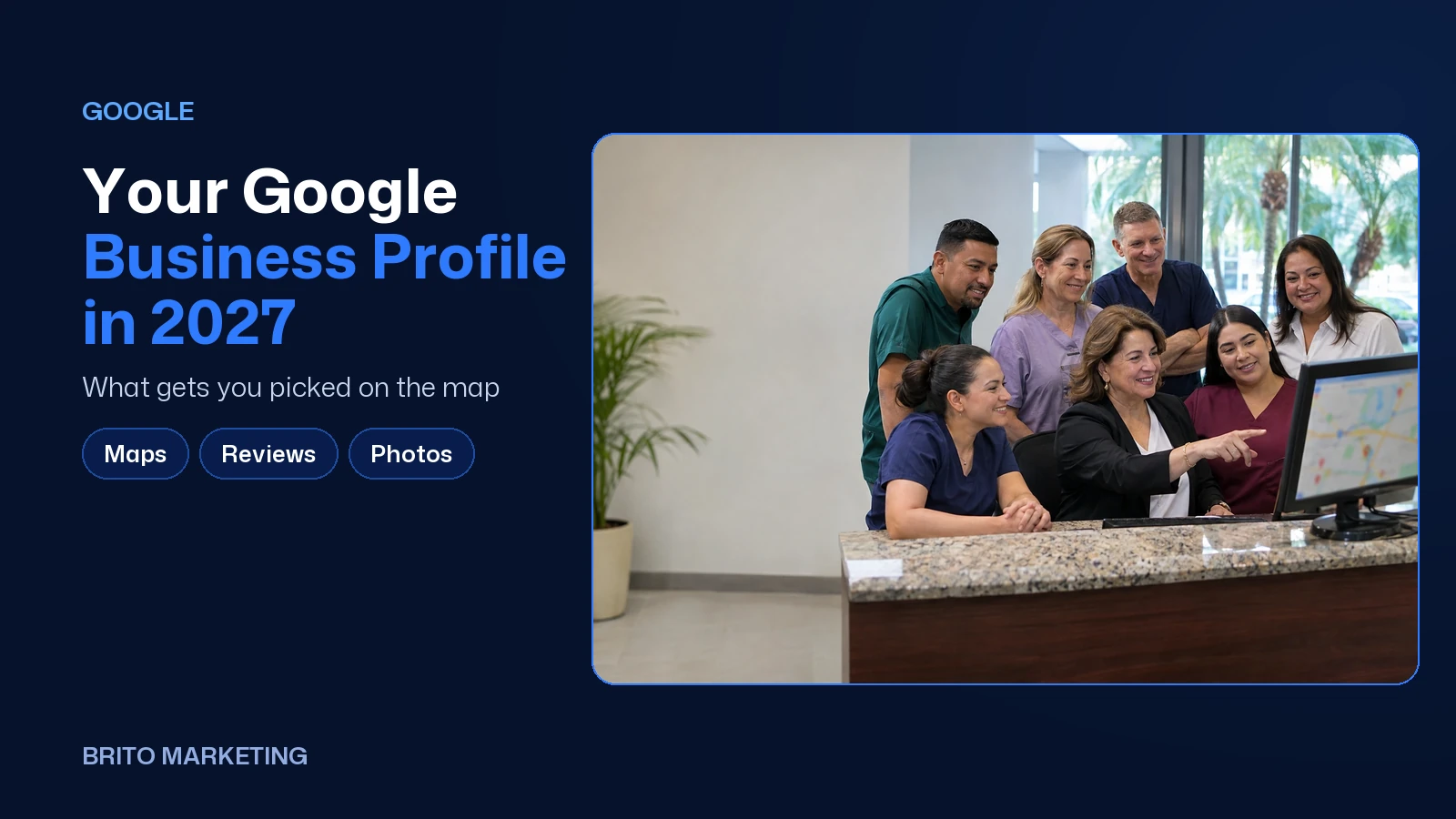
Google lists photos and videos among its tips for your profile, and BrightLocal found that an appealing photo or video alongside a review is one of the things that makes it credible for 36% of consumers. What works is simple: your storefront as it looks from the street (so people can find you when they pull up), the front desk, your team at work and finished jobs. Skip the stock photos. Customers compare what they saw on the map with what they find when they walk in.

Your website has to match your profile
When someone finds you on the map, they often tap through to your website before calling. If they find different hours, a different address or services that aren't on your profile, doubt wins. AI works the same way: when two sources disagree, it has fewer reasons to bring you up. Check that your name, address, phone, hours and services match character for character. Everything else your site needs to turn that visit into a call is in the 10 things a site that sells gets right.
Track what your profile brings in
Your profile's performance panel shows calls from the call button, direction requests and website clicks. Check them once a month and compare them with the previous month, not last week. One thing that trips people up: Google only counts calls made with the button, so anyone who copies your number and dials it by hand won't show up there. That's why it pays to ask “How did you find us?” on every new call and write it down.

| What the customer sees | Why it matters | What to do in 2027 |
|---|---|---|
| Star rating | Nearly one in three rules out anyone under 4.5 | Ask every happy customer for a review, the same day |
| Review count | With only a few reviews, you get skipped | A steady system for asking, not one-off pushes |
| Whether you reply | People expect fast, personal replies | Answer every review within a day or two, no templates |
| Photos | They're the first visit to your place | Storefront, team and real work, refreshed monthly |
| What the AI says | It's replacing Q&A | Complete attributes, services and description |
| Hours and details | One outdated detail breaks trust | Holiday hours set and details matching your site |
Where to start
- Today: search for your service on Google Maps from your phone, the way a customer would, and write down the rating and review count of the top three.
- This week: reply to every review from the last three months that's still unanswered, each with something specific to that customer.
- This month: fill in your profile's attributes and services, upload five real photos and set your holiday hours.
Keeping a profile alive is weekly work, and it's easy to let it slide when the business gets busy. At Brito we run it connected to everything else: BritoCRM asks for a review after every job, your website and profile say the same thing, and the photos and videos come from your own team, in English and in Spanish. We've been doing this from Miami since 2006. In Miami-Dade and Broward we come to your business; farther out, we meet by video call. If you want to see how your profile stacks up against the competition, request a free assessment and we'll go over it with you, no strings attached.
Frequently asked questions
Can I pay Google to show up first on the map?
Not in the regular results. Google's help center says there's no way to request or pay for a better local ranking. Ads can appear on the map, but they're labeled as sponsored and are a separate thing.
I got an unfair one-star review. Can I delete it?
You can't delete it yourself, but you can report it if it breaks Google's policies. In the meantime, reply calmly and stick to the facts, without arguing. People reading it will judge your reply more than the complaint.
I work from home and go to my customers. Can I have a profile?
Yes. Google lets you set up your profile as a service-area business without showing your address. Just make sure the areas you list are the ones you actually cover.
How often should I update my profile?
Your details, whenever they change, and holiday hours before every holiday. Photos, once a month. Reviews, as soon as they come in, since nearly one in five customers now expects a same-day reply.
Twenty years building brands in New York, Las Vegas and Miami, where he's based today. He leads a Miami team that shoots commercials on cinema cameras and runs proprietary AI infrastructure. He believes great marketing starts with truly understanding the customer — and that honesty, often frowned upon in this industry, is what separates partners from vendors.
View profile→Questions about your business?
The first conversation is an assessment, not a sales pitch. Let's talk.
Or explore our Search + AI (SEO & AEO) service
Study: Who ChatGPT and Perplexity Recommend When You Look for a Marketing Agency in Miami (October 2026)
We asked ChatGPT and Perplexity the same 50 questions, in English and Spanish. The AI named more than 100 different businesses, none in more than 4 answers, and for city searches it almost always picked someone from that city. Data, method and limits.

AI Marketing Without Losing the Human Voice
AI speeds up almost everything in marketing. But there's one thing it does badly, and your customers notice instantly.