How to Ask Customers for Reviews Without Making It Awkward
When to ask, what to say in person, by text and by email, and what Google and the FTC don’t allow: no rewards in exchange, no asking only the happy customers and no reviews from your own staff.
Short answer
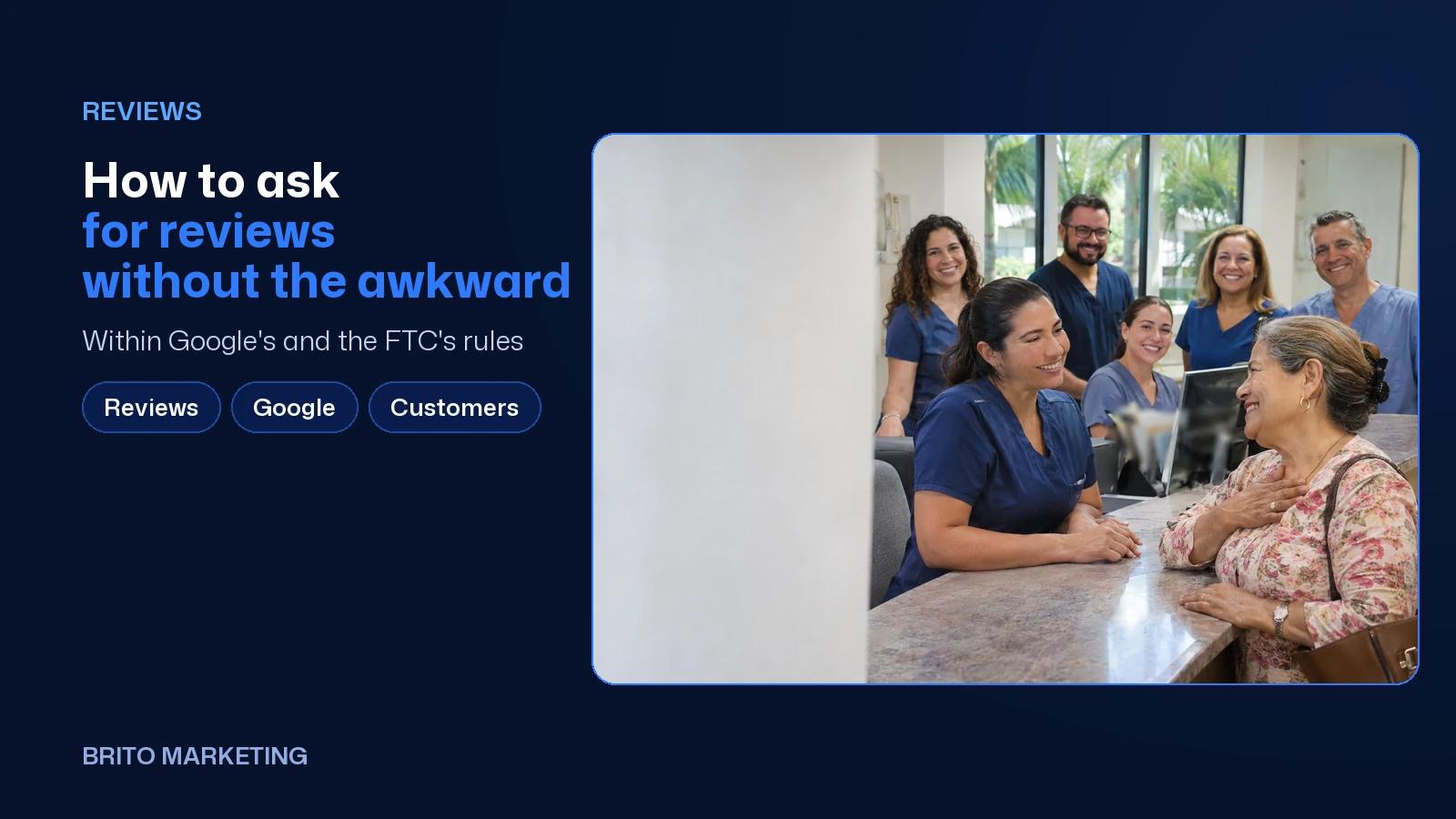
Ask for the review the same day, right when the customer thanks you, with one simple line and a direct link by text or WhatsApp. Ask every customer the same way, with no gifts or discounts in return, and follow up once. That keeps you within Google’s and the FTC’s rules and never feels like begging.
It’s Thanksgiving, a good day to think about the people who trusted your business this year. Most owners hate asking for reviews because it feels like bothering people or asking for a favor. The thing is, plenty of customers would gladly leave one if someone asked them the right way at the right moment. Here’s how to make it feel natural, with lines you can borrow, plus the rules you can’t skip.
The timing: when the customer says thank you
The best cue to ask for a review is a customer thanking you for something. “That was fast.” “Thanks for walking me through it.” That’s your moment. The ask comes easily because you’re responding to something they just said, so it doesn’t feel like a favor out of nowhere. Wait three weeks and the good feeling cools off, and your message is competing with everything else on their phone.

What to say, channel by channel
| When | Channel | What to say |
|---|---|---|
| Right as the job wraps up | In person | “I’m really glad it worked out. Mind if I text you a link so you can share how it went on Google? It helps other people find us.” |
| An hour or two later | Text or WhatsApp | “Hi Mike, it’s Ana from the clinic. Thanks for coming in today. If you’ve got a minute, here’s where you can share how it went: [link]. Text me if you need anything.” |
| If you didn’t hear back | Email, 3 or 4 days later | One short reminder with the link and zero pressure. If they don’t leave one, let it go. |
Three details make the difference. The link should open straight to the review box. You can grab it from your Google Business Profile and save it on the phone of everyone who works with customers. The message goes out in the language the customer used with you. And never tell them what to write or how many stars to give. At most, ask what helped them most, so the review says something specific.
What you can’t do
The FTC’s rule on reviews and testimonials has been in effect since October 21, 2024. It bans fake reviews, including AI-written ones; bans offering anything in exchange for a review that expresses a particular opinion; requires reviews from company insiders to disclose their connection to the business; and bans threatening people to keep a negative review from going up or to get it taken down (FTC, 2024). Google’s policies go further (Google, contribution policy):
- No cash, discounts, gifts or free services in exchange for a review, even if you don’t ask for a positive one.
- No asking only the customers you think are happy, and no discouraging negative reviews.
- No reviews from employees, former employees or family members.
- No pressuring customers to write it on the spot, in front of you.
- No writing reviews on a customer’s behalf, and no posting several from different accounts.
Break those rules and Google can pull the reviews, while the FTC can seek civil penalties from anyone who knowingly violates its rule. The bigger cost, though, is trust: a profile stacked with suspicious reviews doesn’t convince anyone, including the AI tools that read those reviews to decide who to recommend, as we explain in how to rank in AI search.

Make it a habit, not a campaign
The reviews that help are the recent ones, so asking once a year won’t cut it. What works is making the request part of how every job ends, like handing over the invoice. Give it an owner: one person on the team checks every Friday who got asked and who didn’t. And reply to every review with something specific to that customer. You’ll find the step-by-step on replies in how to get quality Google reviews, and why reviews carry so much weight in 2027 in how to stand out in 2027.
Where to start
- Today: copy the direct review link from your Google profile and send it to your whole team.
- This week: pick the lines from the table, tweak them so they sound like you, and save them on your business phones.
- This month: ask every customer you serve, no exceptions, and reply to each new review before the following Monday.

Asking for reviews sounds easy until you have to remember it every day, with every customer. At Brito we build it into the system: BritoCRM sends the review request automatically when each job closes, to every customer alike and in their language, and your team just has to reply. If you want to see how this fits with the rest of your marketing, you can build your plan in 2 minutes whenever you have a moment. Happy Thanksgiving.
Frequently asked questions
Can I give a discount to customers who leave a review?
Not for Google reviews. Google’s policy bans any incentive, even if you don’t ask for a positive review. The FTC allows incentives that don’t depend on what the review says, but Google’s rules are stricter and it can remove the reviews.
Can my employees or family leave reviews?
Not on Google, which treats it as a conflict of interest and removes it. Under the FTC rule, if anyone connected to the company leaves a review anywhere, they have to clearly disclose that connection.
What if I know a customer left unhappy? Do I still ask?
Fix the problem first. But don’t leave them off the list on purpose, since asking only happy customers goes against Google’s policies. A negative review with a thoughtful reply says good things about you, too.
How many times can I remind a customer about the review?
Once, a few days after the first ask. Anything beyond that starts to feel like pressure, and pressuring customers runs against what Google asks for.
Twenty years building brands in New York, Las Vegas and Miami, where he's based today. He leads a Miami team that shoots commercials on cinema cameras and runs proprietary AI infrastructure. He believes great marketing starts with truly understanding the customer — and that honesty, often frowned upon in this industry, is what separates partners from vendors.
View profile→Questions about your business?
The first conversation is an assessment, not a sales pitch. Let's talk.
Or explore our AI Advertising service
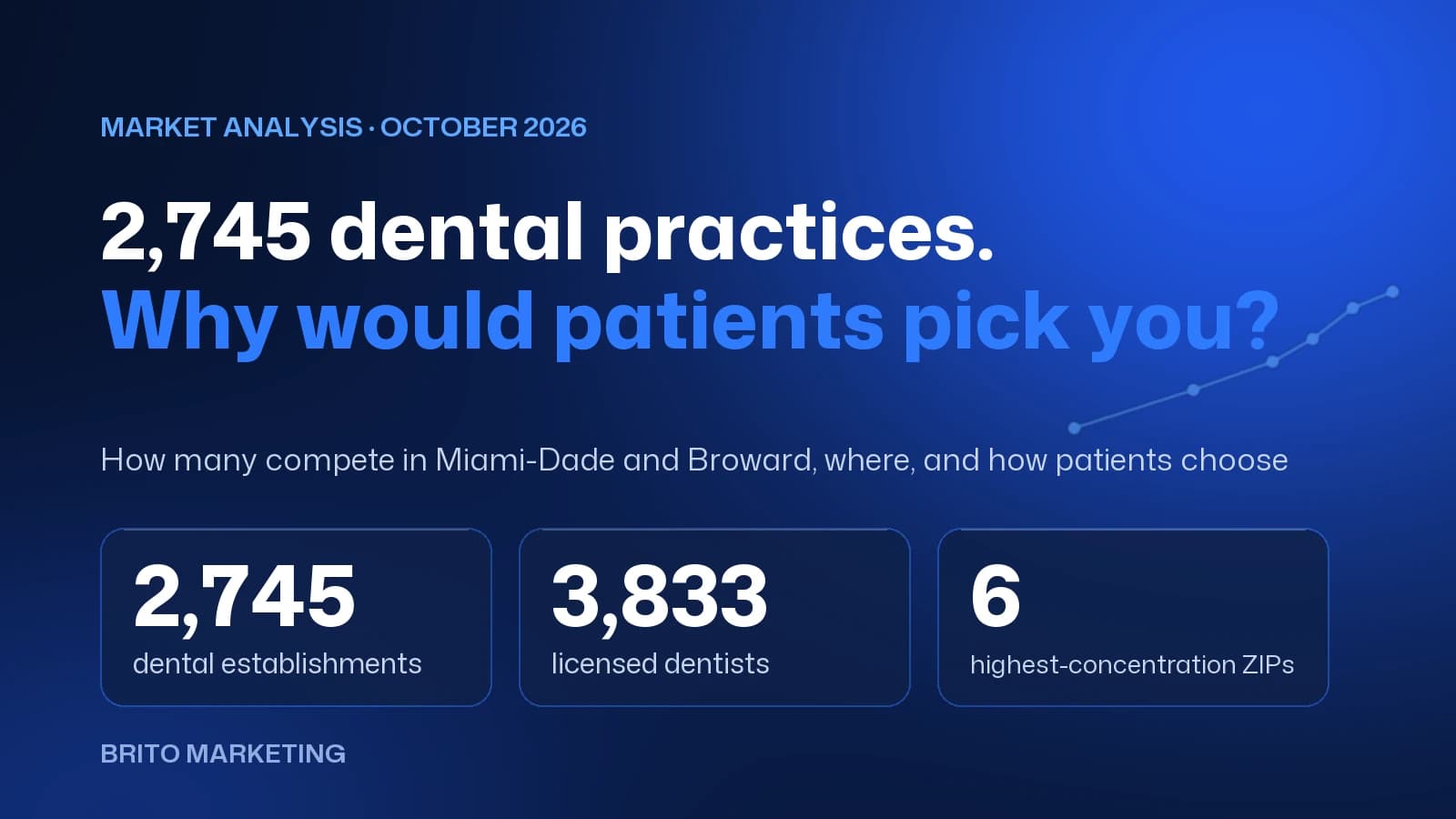
2,745 Dental Practices Compete in Miami-Dade and Broward: Why Would a Patient Choose Yours?
We measured the dental market in Miami-Dade and Broward with federal and state data: how many practices compete, which ZIP codes they cluster in and how patients choose today. There's no shortage of options, only of clear reasons to pick one.

Florida Lawyer Advertising Rules: What The Florida Bar Requires and How to Comply
What The Florida Bar's Rule 4-7 requires in a law firm's ads: name and city, language, testimonials, "expert" claims, actors, and filing with the Bar 20 days ahead. Every rule, with its number and source.