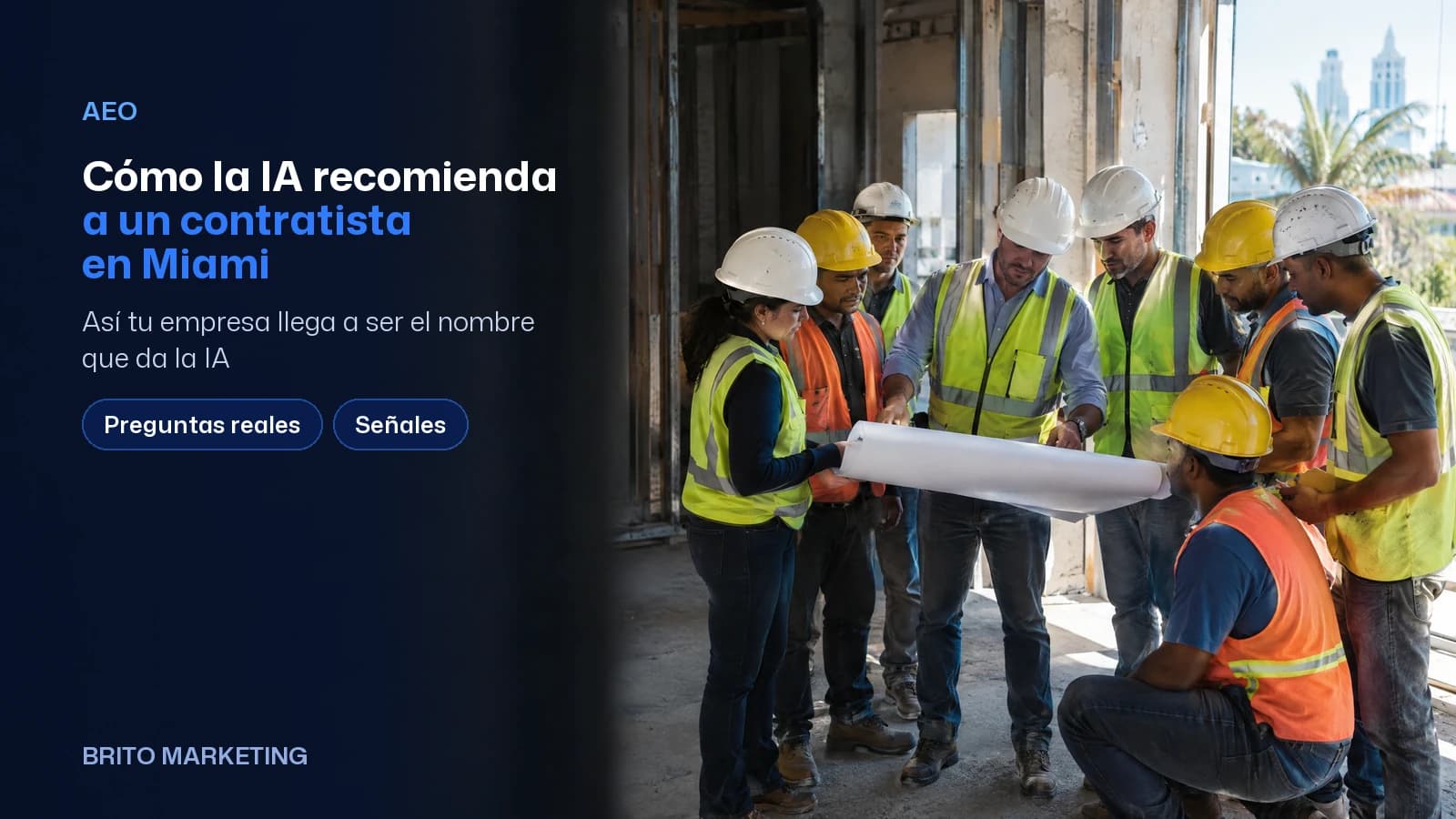
How AI Recommends a Contractor in Miami
Before hiring someone for their home, people now ask ChatGPT who they can trust. Here's how your remodeling business becomes the name the AI gives them.
Short answer
Before hiring a contractor, people ask AI about costs, permits and inspections. To get named you need honest answers (ranges, not magic numbers), GeneralContractor schema, a visible license and insurance, real finished-job photos, reviews and consistent NAP. Showing your license and honest ranges calms a nervous homeowner — and it's what AI reads as trustworthy.
A family's roof gave out in the middle of rainy season. Another finally saved up to redo the kitchen and is terrified of it going wrong. A third lived the nightmare: they paid a deposit to a contractor who vanished with the money. Not long ago, all three would have gotten three quotes and prayed. Today, many open ChatGPT and type something like "who's a trustworthy contractor in Miami who speaks Spanish?" — and get two or three names back. If your business isn't one of them, that job was never yours.
There's a name for getting into that answer: AEO, answer engine optimization. It's the work of getting the AI to name you when someone asks it for a contractor like you. This article walks through how it works in construction and remodeling, in Miami, and what you can start doing this week.
What people actually ask the AI
Nobody looks for a contractor for fun. Behind every query there's a house, a chunk of savings and a real fear of it all going wrong. And people talk to the AI the way they'd talk to the neighbor who already remodeled: with the whole situation. These are real queries people run every day in Miami:
- "Trustworthy contractor in Miami" — or its Spanish version, “contratista de confianza”, often typed by the very same person.
- "Who remodels kitchens in Doral?"
- "How much does it cost to remodel a bathroom in Miami?"
- "Contractor who speaks Spanish near me."
- "How do I know if a contractor is licensed in Florida?"
- "Roofing contractor for an insurance claim in Miami."
Notice the pattern: almost none of them is just a name. They carry a trade, an area, a budget and, very often, a language. And several are loaded with distrust: the word "trustworthy," the word "licensed." The AI doesn't answer with ten links or a map full of options. It answers with a short recommendation. Being in that answer is all that matters.
Why this matters so much in construction
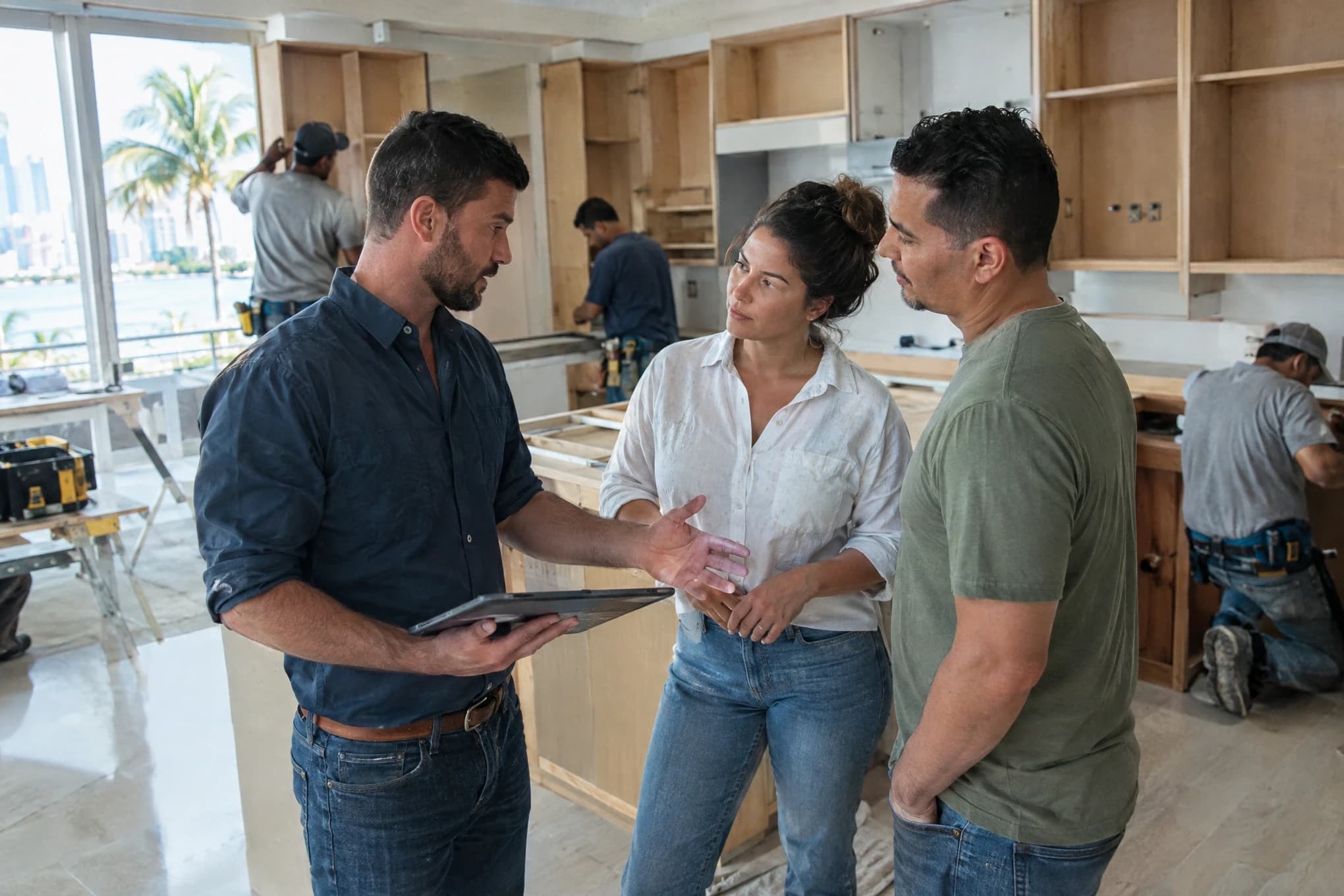
Hiring a contractor isn't like ordering a pizza. It's letting a stranger into your home, handing over a deposit of thousands of dollars and trusting they'll finish. It's a high-cost, high-risk and, above all, fear-driven decision — because a lot of people know someone whose contractor left a job half-done or walked off with the money. The person who arrives through an AI recommendation already has the project in their head and is eager to get started. They're not just fishing for a price: they're a real client. That's why showing up in that answer, or not, translates directly into jobs that come in or jobs that go to the guy next door.
Ready to apply this to your business?
What makes an AI recommend a contractor
The AI doesn't recommend whoever has the biggest truck or hands out the most flyers. It recommends the business it can understand, verify and explain with confidence. In construction, that's built from concrete pieces:
- Clear answers to the real project questions: pages that explain, in plain words, what it usually costs to remodel a kitchen or a bathroom in Miami, how long it takes, which permits you have to pull and what happens at inspection. Content that answers, not content that only sells.
- GeneralContractor schema (part of the HomeAndConstructionBusiness family): the code behind your site that tells the AI, without ambiguity, that you're a contractor, which trades you do, where you work and how to reach you.
- License and insurance up front: your Florida license number and your liability coverage, clear on the site. It's the first thing people look for and the first thing that gives the AI confidence to name you.
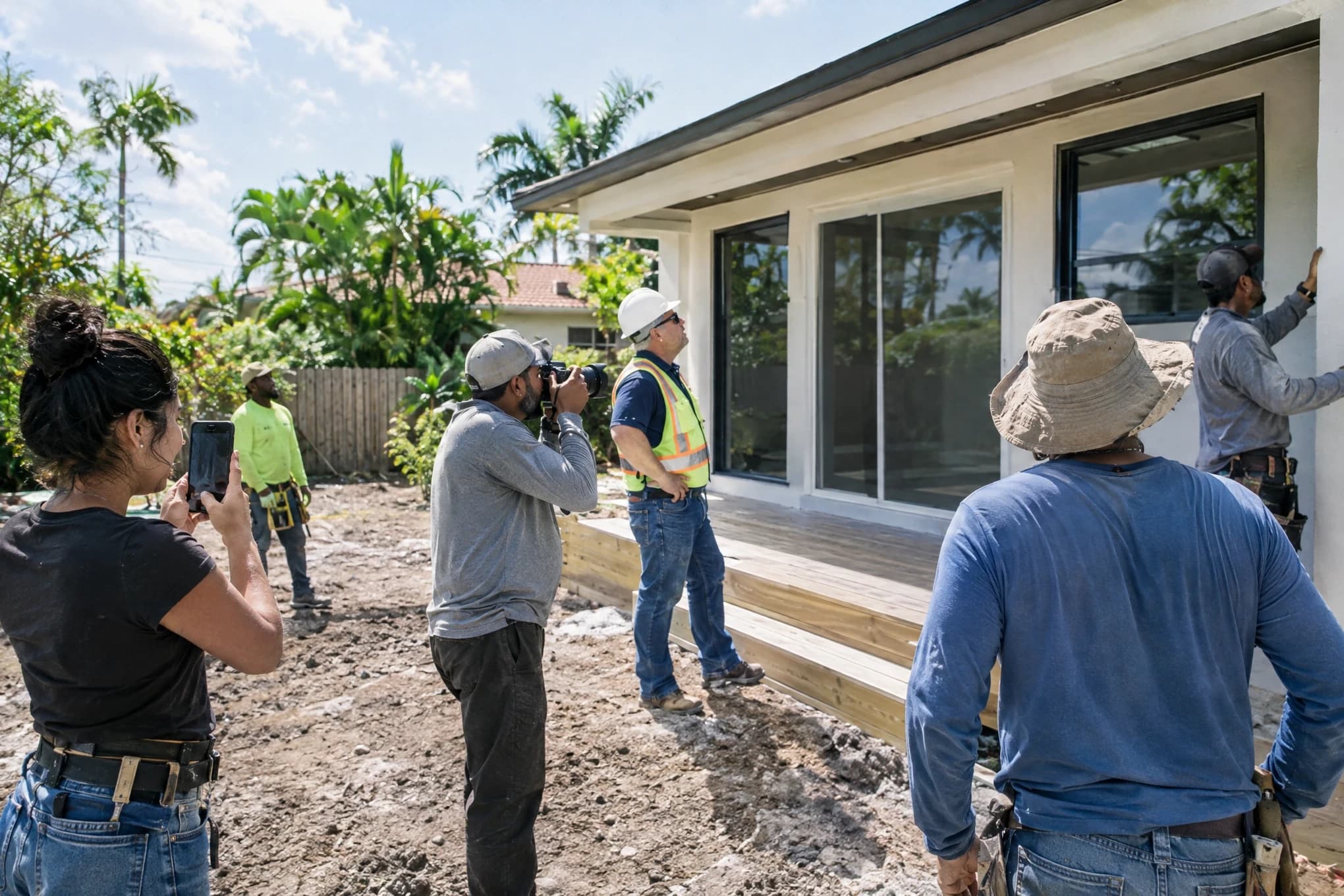
- Real photos of finished jobs: before-and-afters of work you actually did. Not stock photos — your jobs, with your name on them, proof that you exist and that you know the trade.
- Genuine client reviews: real opinions from real people whose homes you left in good shape. You don't invent or buy them; you earn them and tend to them by responding to each one.
- Consistent name, address and phone: identical on your site, your Google profile, directories and every profile. If the information doesn't match, the AI hesitates, and when it hesitates, it doesn't name you.
- A real bilingual presence: in Miami the homeowner searches “contratista” in Spanish, but the inspector, the property manager and the insurance adjuster work in English. A business that answers well in both languages gives the AI a lot more ways to find it.
The angle few take advantage of: honesty works in your favor
This is where construction is different from almost everything else. The market is full of fear — fear of the unlicensed contractor, of the deposit that evaporates, of the job that starts and never ends, of the estimate that triples halfway through. That fear is your biggest obstacle. But if you read it right, it's also your biggest advantage.
Think about it. Answer engines are trained to distrust exaggerated promises and to prefer accurate, verifiable, well-explained information. The contractor who says "I'll have it done in a week, no surprises, dirt cheap" raises a red flag — for the nervous homeowner and for the AI. The one who shows their license, explains that a permit in Miami-Dade takes time, gives an honest price range instead of a magic number and warns that in an old house something can always turn up behind the wall, wins on both fronts at once. The very thing that calms the scared client is what the AI reads as trustworthy. For once, being honest and being recommended are the same thing.
A short list to start this week
You don't need to rebuild everything. You start with what moves the needle most:
- Write one page per trade you do — kitchens, bathrooms, roofing, impact windows — that answers that client's real questions, in Spanish and English, with honest price ranges and timelines.
- Install GeneralContractor schema (part of the HomeAndConstructionBusiness family), and check that your name, address and phone are identical everywhere.
- Put your Florida license number and your insurance where people can see them on the site, and upload real photos of finished jobs with before-and-afters.
- Ask happy clients for reviews and respond to all of them, even the hard ones, calmly and without picking a fight.
- Ask ChatGPT, Perplexity and Gemini yourself for "the best [your trade] contractor in Miami" and see if you show up. That's your honest starting point.
That last step is the most revealing, and also the most uncomfortable. If you'd like, we'll do it for you at no cost: we'll show you what AI and Google say today when someone looks for a contractor like you in Miami, and the main gaps keeping your business from being one of the names that come up. It's a diagnosis, not a sale — and in a space where, from what we see, very few contractors are working on this deliberately yet, whoever moves first takes the advantage.
Twenty years building brands in New York, Las Vegas and Miami, where he's based today. He leads a Miami team that shoots commercials on cinema cameras and runs proprietary AI infrastructure. He believes great marketing starts with truly understanding the customer — and that honesty, often frowned upon in this industry, is what separates partners from vendors.
View profile→Questions about your business?
The first conversation is an assessment, not a sales pitch. Let's talk.
Or explore our Search + AI (SEO & AEO) service

How AI Recommends a Law Firm in Miami
When someone has a legal problem, they no longer compare ten lawyers: they ask ChatGPT and get two or three names. Here's how your firm becomes one of them.

How AI Recommends a Dentist in Miami
With a toothache on a Saturday, nobody compares ten clinics: they ask ChatGPT and get two or three names. Here's how your practice becomes one of them.